Rome Public Transport in 2026: How to Use the Metro, Bus and Tram Without Wasting a Day
Rome public transport is cheap, but it is not obvious. One ticket costs €1.50 and covers the metro, buses and trams, yet most first-time visitors still lose an hour standing at the wrong stop, buying the wrong pass, or waiting for a bus that a strike cancelled that morning. The system is run by ATAC, it has only three metro lines, and half of Rome's most famous sights have no metro station anywhere near them.
This guide covers what the 2026 fares actually are, which lines are worth your time, which ones to avoid, and where the network simply will not take you. If you want to see the main sights without decoding a bus map on day one, the Rome Hop-On Hop-Off Sightseeing Tour runs a fixed loop past the Vatican, Piazza Venezia, Trevi and Termini with commentary on board, so your first day is planned before you land.
Rome Transport at a Glance: 2026 Prices and Hours
- Single ticket (BIT): €1.50, valid 100 minutes
- What the BIT covers: unlimited buses and trams for 100 minutes, plus one metro entry
- 24-hour pass: €8.50
- 48-hour pass: €15.00
- 72-hour pass: €22.00
- Weekly pass (CIS): €29.00
- Metro hours: roughly 05:30 to 23:30, Sunday to Thursday; until 01:30 on Friday and Saturday
- Children: under 10 travel free with a paying adult
- Fines for riding without a valid ticket: from around €100, and they can climb far higher
The 2026 fare rise everyone talks about has not landed yet. ATAC's industrial plan flagged a possible increase of the single ticket to €2.00 during 2026, subject to Lazio Region approval, so check the machine screen before you assume €1.50.
What One €1.50 Ticket Really Buys You
This is the rule that catches people out. A BIT gives you 100 minutes of travel, but only one entry through a metro turnstile. Ride the metro to the Colosseum, walk around for an hour, then go back down into the metro, and you need a second ticket even if your 100 minutes have not run out.
On buses and trams there is no such limit. You can change lines as often as you like inside the 100 minutes on the same ticket.
The same ticket also works on Rome's urban rail lines: the Metromare line to Ostia (the one you want for Ostia Antica's ruins), the Rome–Viterbo line inside the city limits, and second-class regional trains within the urban zone.
What it does not cover: the Leonardo Express to Fiumicino Airport, Cotral regional coaches to towns outside Rome, and tourist sightseeing buses. Those are separate tickets, always.
Rome Metro Map 2026: Three Lines, and Only Two You Will Probably Use
Rome has one of the smallest metro networks of any major European capital, for a simple reason: every time engineers dig, they hit ruins. Here is what actually exists.
Line A (orange), Battistini to Anagnina. The tourist line. Twenty-seven stations, about 41 minutes end to end.
- Ottaviano and Cipro — Vatican Museums, roughly a 10-minute walk
- Spagna — Spanish Steps, exits straight into the piazza
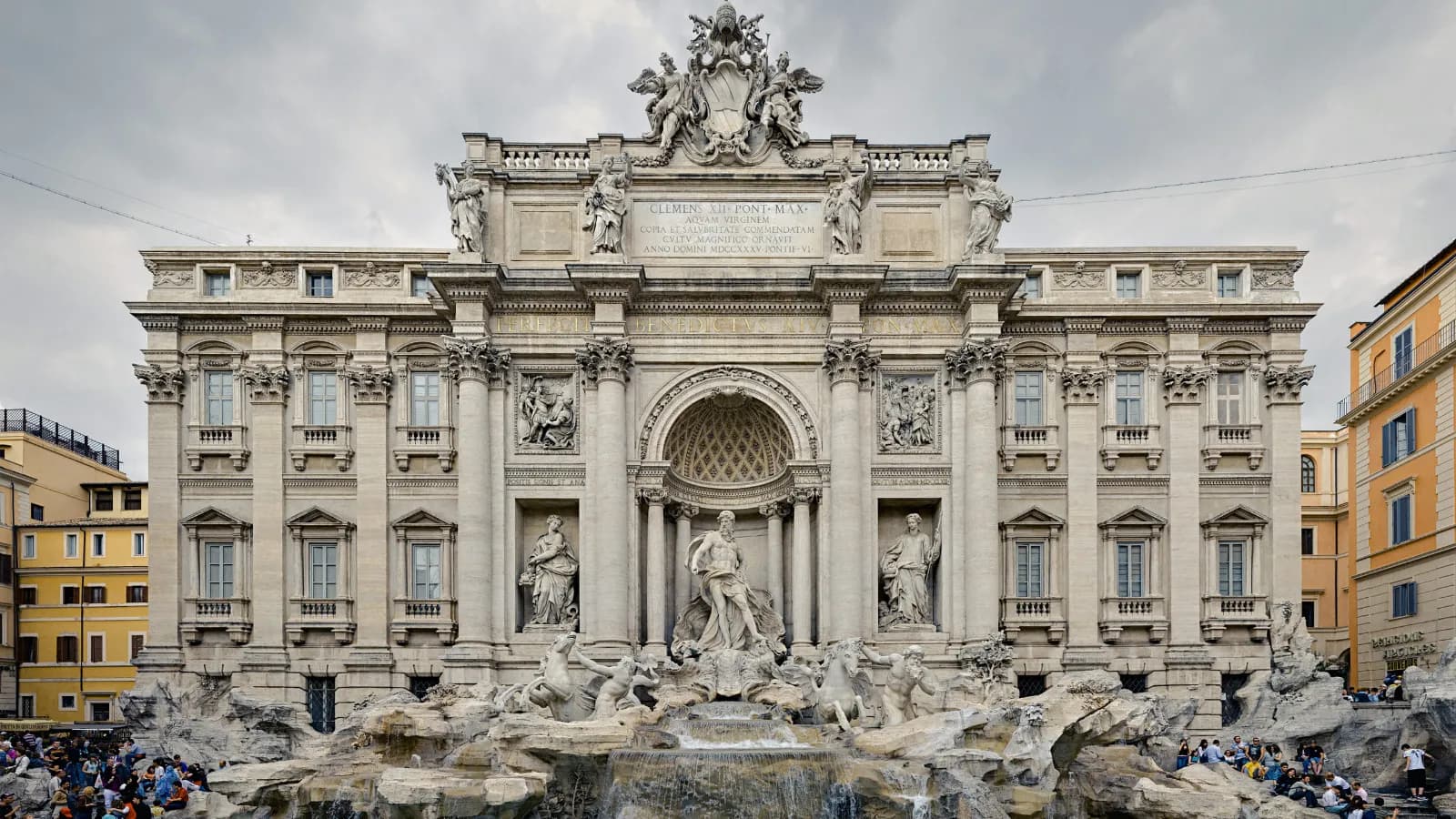
- Barberini — closest station to the Trevi Fountain, about 8 minutes on foot
- Flaminio — Piazza del Popolo and Villa Borghese
- San Giovanni — the basilica, and the interchange with Line C
Line B (blue), Laurentina to Rebibbia, with the B1 branch to Jonio. The ancient Rome line.
- Colosseo — the Colosseum is directly outside the exit
- Circo Massimo — Circus Maximus, the Aventine Hill and the Baths of Caracalla
- Piramide — connects to Ostiense station and the Metromare line to Ostia
- Termini — the only point where Lines A and B cross
Line C (green), Monte Compatri/Pantano to Colosseo/Fori Imperiali. Driverless, modern, and now finally useful to visitors.
Trains on all three lines run every few minutes at peak times. The official zoomable metro map is free in the ATAC app, which is worth downloading before you arrive rather than photographing a wall map at Termini.
The Big 2026 Change: Metro C Now Reaches the Colosseum
For years Line C stopped short of anything a visitor cared about. That changed on 16 December 2025, when the Colosseo/Fori Imperiali and Porta Metronia stations opened, adding about 3 km of tunnel through the historic core and bringing Line C to 24 stations.
Two things matter for your trip:
It creates a second interchange. Colosseo/Fori Imperiali now links Line C to Line B, so travellers from the eastern suburbs can reach the Forum area without crossing at Termini.
The stations are small museums. Excavations under Via dei Fori Imperiali and Piazzale Ipponio uncovered a 2nd-century Roman military compound with a commander's house, frescoes and mosaic floors. The finds were built into the stations rather than removed, with viewing walkways and glass panels along the passenger route. Porta Metronia's archaeological display area opened in February 2026.
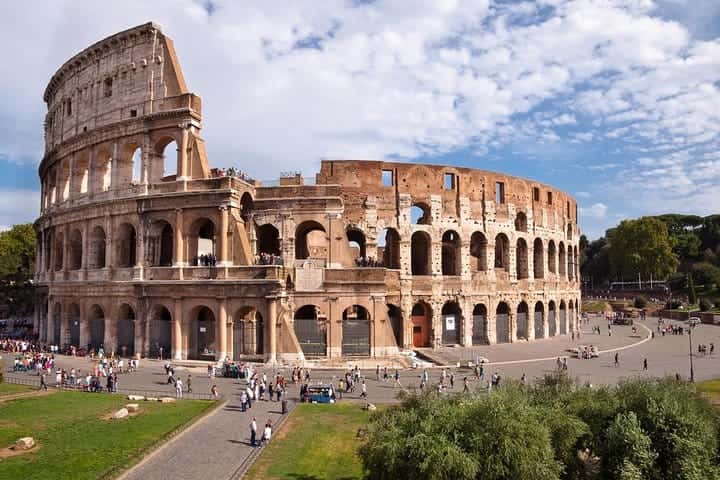
If you are heading to the Colosseum anyway, arrive 15 minutes early and walk the station level before you surface. Then use those tickets you already booked — the Colosseum Guided Tour with Roman Forum & Palatine Hill includes priority entrance and a licensed guide for three hours, currently €72.17 instead of €80.19, so the metro drops you at the door and the queue is already handled.
Work continues towards Piazza Venezia, Chiesa Nuova and St Peter's. None of those stations are open, so do not plan around them.
Rome Buses and Trams: The Lines Worth Knowing
Rome's bus network fills every gap the metro leaves, which is most of the city centre. These are the routes that repeatedly save visitors time.
Bus 40 Express — Termini to Piazza Pia. Fewer stops than the 64, same destination near Castel Sant'Angelo and St Peter's. Locals use this one on purpose.
Bus 64 — Termini to St Peter's. The most famous tourist bus in Rome and the most heavily worked by pickpockets. Take it if you must, but keep your bag in front of you and never in an outside jacket pocket.
Bus H — Termini to Trastevere. The simple way across the river for dinner.
Bus 62 and 492 — useful crosstown routes that stop near Largo di Torre Argentina, the drop-off point for the Pantheon, Piazza Navona and Campo de' Fiori.
Tram 8 — Piazza Venezia to Trastevere and Casaletto. Frequent, fast, and it beats walking after a long day.
Tram 19 — Piazza Risorgimento to San Lorenzo, passing Villa Borghese and the Bioparco. The best single ride for combining the Vatican side with the park.
Tram 3 links Trastevere with the Colosseum and Valle Giulia's museums, though sections are sometimes replaced by a bus during works.
Bus 118 and 218 — the routes towards the Appian Way and the catacombs, where walking is not realistic.
Night buses (the "n" lines) take over when the metro closes. nMA, nMB, nMB1 and nMC follow the metro corridors. They work, but gaps between departures can be long, and Rome's night bus stops are not well lit. After midnight, a taxi or an app like FREENOW is often the better call.
How to Pay in 2026: Tap & Go, Paper Tickets and the Daily Cap
Rome's metro turnstiles and most buses and trams now take contactless bank cards and phones directly, through the Tap & Go system. There is no app to install, no registration, and no surcharge.
Tap once and you are charged €1.50 for a 100-minute BIT. Keep tapping through the day and the system keeps adding fares until you hit €8.50, at which point it converts your day into a 24-hour ticket and stops charging. In practice, six or more journeys in one day means the cap is doing the work of a day pass for you.
Two rules people break constantly:
- One card per person. Two travellers cannot tap the same card. Inspectors treat that as fare evasion.
- Tap on the bus too, not just the metro. The readers on surface vehicles are the same system, and skipping them is exactly what gets fined.
Paper tickets are still sold at station machines, tabacchi (tobacco shops, marked with a white T), and newsstands. Prepaid cards for storing BIT journeys cost €0.50, and the fee is waived if you load three or more.
Validation and Fines: The Mistake That Costs €100
Ticket inspectors do board buses in Rome, including on tourist-heavy routes, and they are unmoved by confusion. Fare evasion penalties run from roughly €100 upwards, plus the ticket price and processing fees.
The rules are simple once you know them:
- Paper ticket on a bus or tram: stamp it in the small machine on board, the moment you get on. The 100 minutes start from that stamp.
- Paper ticket on the metro: feed it into the turnstile.
- Contactless: tap the reader on entry every single time.
- An unstamped ticket in your pocket counts as no ticket at all.
Keep the ticket or your card until you leave the system. Inspectors check on exit as well as on board.
Getting In From the Airports (and Why Your City Ticket Will Not Work)
No ATAC ticket or day pass covers the airports, and neither does the Roma Pass.
From Fiumicino, the Leonardo Express runs non-stop to Termini in 32 minutes for €14 per person, with the last departure from the airport around 23:27. The cheaper FL1 regional train costs about €8 but does not stop at Termini — it serves Trastevere, Ostiense and Tiburtina. Official taxis charge a fixed €55 to anywhere inside the Aurelian Walls, covering up to four people, luggage and any hour of day. From Ciampino, the Airlink bus-plus-train combination to Termini is around €2.70, though the connection timing can stretch the trip past an hour.
Those are your public options, stated plainly. The friction is real: platform hunting with luggage, a separate ticket you must remember to validate, a last train that leaves before some flights land, and no help desk if it goes wrong.
Arriving by sea instead of by air is a different problem, and one we solve directly. Best of Rome from Civitavecchia: Colosseum, Hop On Hop Off & Train bundles the Civitavecchia–Rome train ticket, Colosseum entry and a City Sightseeing hop-on hop-off ticket into one booking at €81.20, which removes three separate ticket purchases from a day where a missed connection means missing the ship.

Price Bridge: ATAC Passes vs Roma Pass vs Our Rome Sightseeing Tickets
This is the comparison most guides skip, and it is the one that decides your budget.
Option 1 — ATAC 24-hour pass, €8.50 (official price) What you get: unlimited metro, bus, tram and urban rail for 24 hours from first validation. What you do not get: any commentary, any attraction entry, any seat guarantee, any help finding the right line. You navigate everything yourself, in a system where in-vehicle announcements are limited and stop names assume you know the city.
Option 2 — Roma Pass, €38.00 for 48 hours or €62.90 for 72 hours (official prices from Roma Capitale) What you get: unlimited ATAC transport for the period, plus free entry to one attraction (48h) or two (72h), and reduced entry after that. What you do not get: the Vatican Museums, the Sistine Chapel and St Peter's Basilica are excluded entirely. The Colosseum still needs a separate timed reservation through the Roma Pass app, and availability is often gone 10 to 20 days out in high season. Airport trains are not included. Compared against a €22 ATAC 72-hour pass, the Roma Pass premium is roughly €40, which only pays back if you genuinely use those museum entries.
Option 3 — Get Your Roman Tours sightseeing and guided products (our current prices)
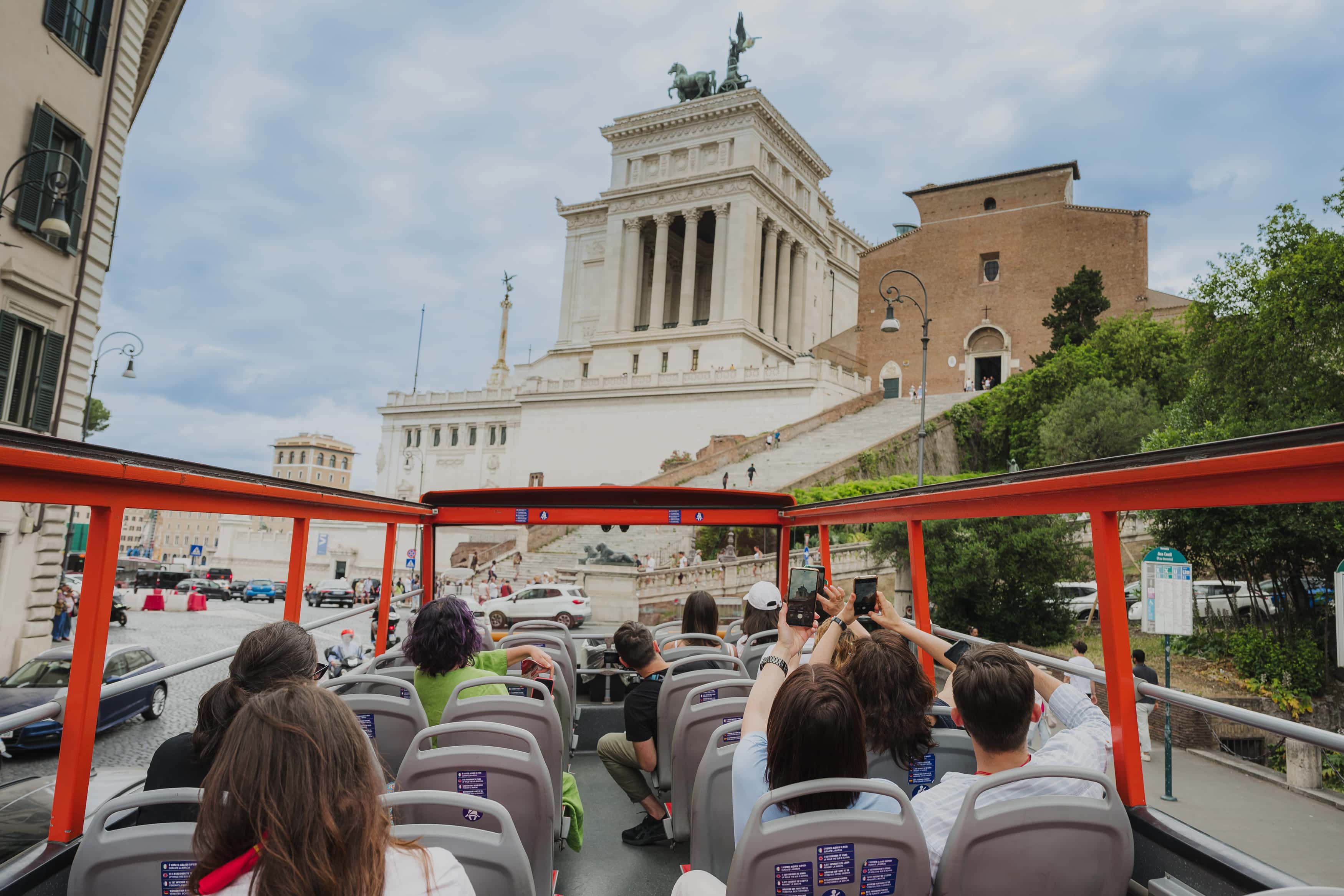
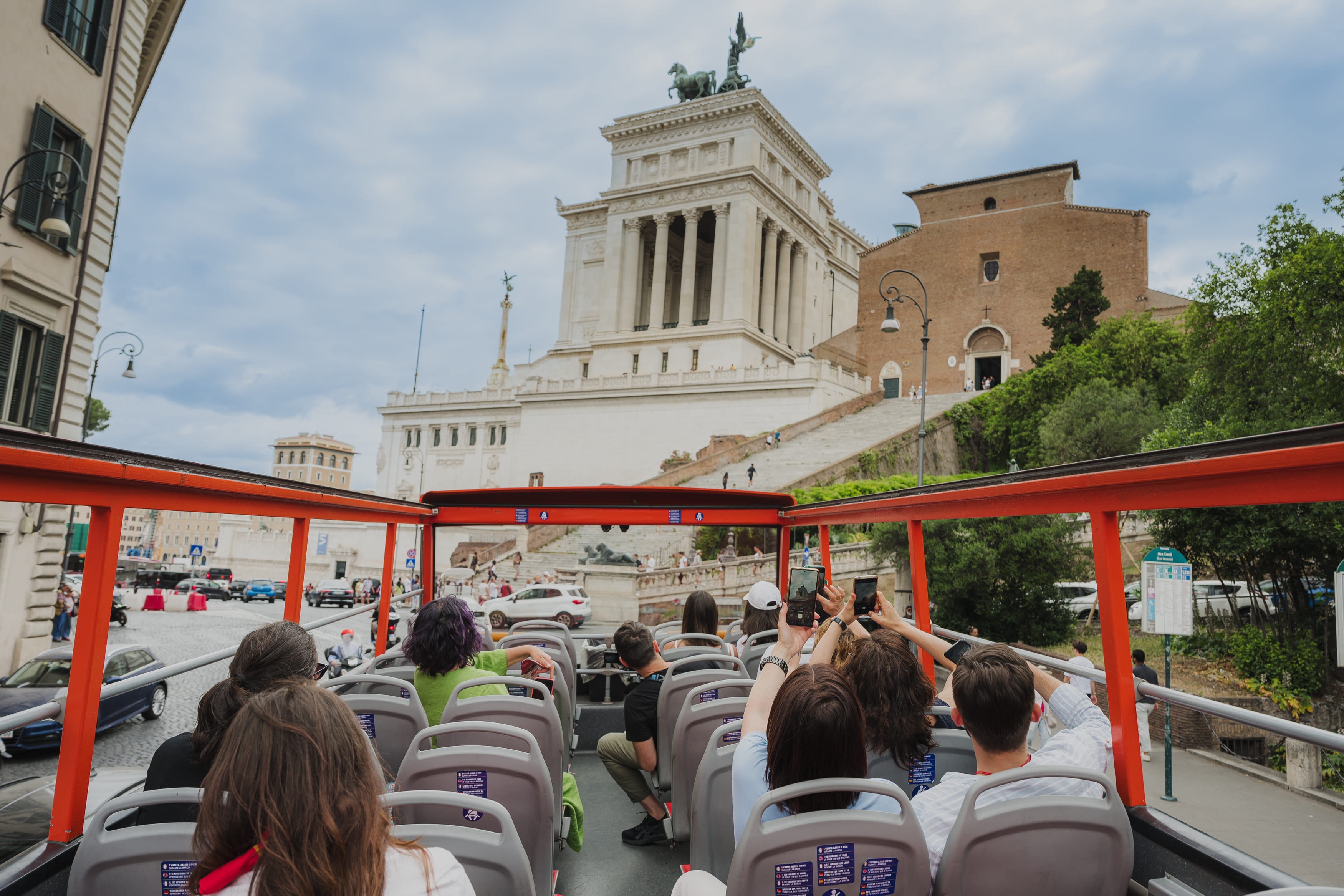
- Rome Hop-On Hop-Off Sightseeing Tour — open-top double-decker on the City Sightseeing yellow line, 8 stops including Termini, Santa Maria Maggiore, Circo Massimo, Piazza Venezia, Vaticano, Trevi and Piazza Barberini. Commentary in English, German, Italian and French. Mobile ticket, instant confirmation, free cancellation up to 24 hours before. From €18.27.
- Daily Ticket – Hop-On Hop-Off — unlimited same-day hopping, €23.02 instead of €28.42.
- One Run Ticket — a single full loop with no hopping off, €18.09 instead of €22.33, for travellers who just want the orientation ride.
- Green Line Tours Rome Hop On Hop Off Bus Tickets — €22, open-top with audio guide and unlimited stops.
- Big Bus Rome Hop-On Hop-Off Sightseeing Tour — €25.
So why does a sightseeing bus cost more than an €8.50 city pass? Because they solve different problems. The ATAC pass moves you between addresses you already know. The hop-on hop-off ticket moves you between the sights themselves, on a single loop that needs no route planning, with commentary explaining what you are looking at, an app showing live bus positions and waiting times, and free cancellation if your plans change. For a two-day visit where the goal is seeing Rome rather than commuting across it, the €14 difference buys you the navigation, the context and the flexibility.
Many visitors use both: a sightseeing ticket for the big loop, and single €1.50 BITs for the odd metro hop to dinner.
One honest note on the City Sightseeing yellow line: Stop 3 (Colosseo) is currently suspended until further notice, as stated on the product page. Metro Lines B and C both stop at the Colosseum, so the sight itself remains easy to reach.
Popular tours & tickets
Where Rome Public Transport Cannot Take You
This is the gap no fare table shows. Rome's most photographed square kilometre has almost no metro coverage.
No metro station serves the Pantheon, Piazza Navona, Campo de' Fiori, the Trevi Fountain or the Jewish Ghetto. The historic centre is a maze of narrow streets where trains cannot run and large buses will not fit.
Your realistic options there are walking, a small bus to Largo di Torre Argentina, or a taxi. Distances are shorter than they look on a map — Barberini metro to the Trevi Fountain is about 8 minutes on foot, and the Trevi to the Pantheon is another 8 — but the cobblestones are punishing in thin shoes.
Since you will be walking this part of Rome anyway, it is the section where a guide pays for itself. The Pantheon Guided Tour with Entry Ticket Included at €25 covers the entry ticket and the history under the dome, in the exact area where public transport stops being useful.
Strikes: The One Thing That Can Break Your Day
Italy runs legally protected transport strikes, and Rome gets several a year. A sciopero can cut metro service, buses and trams for most of a day.
What to know:
- Strikes are announced in advance, usually a week or more ahead, and ATAC posts them on its website and in its app.
- Guaranteed service bands protect commuters, typically in the early morning and again in the late afternoon on weekdays. Outside those bands, service can stop almost completely.
- The midday gap is where visitors get stranded, which is exactly when most people are moving between sights.
Practical response: check the ATAC app the night before. If a strike is announced, shift your plans to a walkable cluster — the Colosseum and Forum area, or the historic centre — and book anything time-sensitive with free cancellation. Pre-booked tours with fixed meeting points are far easier to reschedule than a self-planned day built around bus connections.
Staying Safe on Rome's Buses and Metro
Rome is a safe city with a persistent pickpocket problem, concentrated in a few predictable places: bus 64, the crowded end of Line A around Termini and Spagna, and the escalators at Termini itself.
- Carry your bag across your chest, in front of you, zipped.
- Never keep a phone or wallet in a back pocket or an open jacket pocket.
- Be alert when a group crowds a doorway just as the doors are closing — the classic manoeuvre.
- Buy tickets from official machines and tabacchi, never from someone offering "help" at a machine.
Violent crime on the network is rare. Theft is opportunistic, and it targets distraction.
Apps That Actually Help in Rome
- ATAC official app — live arrivals, the official metro map, service alerts, strike notices and ticket purchase.
- Moovit or Google Maps — better for door-to-door route planning, especially for bus connections.
- FREENOW — the taxi app most Rome drivers use, useful after the metro closes.
- Sightseeing Experience app — free with the yellow-line hop-on hop-off ticket, showing live bus positions, waiting times at each stop and a walking tour of the centre in five languages.
Accessibility on Rome's Network
Coverage is uneven and worth planning around. Line C is the newest and the best equipped, with lifts and platform screen doors throughout. Line B has lifts at most major stations. Line A is the weak point — several stations, including Spagna and Barberini, have limited or no step-free access, so check before relying on them.
Buses are largely low-floor with ramps, but crowding often blocks the wheelchair space. Trams vary by rolling stock. Rome's cobblestones remain the real obstacle, not the vehicles.
Nine Mistakes Visitors Make on Rome Public Transport
- Forgetting the metro is one entry per BIT, and getting fined on the return leg.
- Boarding a bus with an unstamped paper ticket.
- Buying a 72-hour pass for a trip spent almost entirely in the walkable centre.
- Assuming the Roma Pass covers the Vatican Museums. It does not.
- Expecting a metro station near the Trevi Fountain or the Pantheon.
- Trying to reach Fiumicino on a city day pass.
- Two people tapping one contactless card.
- Ignoring a strike notice posted at the station entrance.
- Riding bus 64 at peak hour with a backpack on their back.
Rome Public Transport FAQ
How much is a single metro ticket in Rome in 2026? €1.50 for a BIT, valid 100 minutes, covering one metro entry plus unlimited bus and tram transfers within that window.
Is the Rome metro 24 hours? No. Trains run from about 05:30 to 23:30 Sunday to Thursday, and until 01:30 on Friday and Saturday. Night buses cover the same corridors after closing.
Can I use a credit card to ride the Rome metro? Yes. Tap your contactless card or phone at the turnstile or on-board reader. You are charged €1.50 per journey with a daily cap of €8.50, one card per person.
Do kids need a ticket in Rome? Children under 10 travel free on ATAC urban transport when accompanied by an adult with a valid ticket.
Is the Roma Pass worth it just for transport? No. A 72-hour ATAC pass costs €22 against €62.90 for the 72-hour Roma Pass. The difference only makes sense if you will genuinely use the two included museum entries, and the Vatican is not among them.
Is Rome's public transport good enough to skip taxis entirely? For most itineraries, yes, with one exception: late nights and the historic centre, where walking or a taxi beats waiting for an infrequent night bus.
What is the fastest way from Termini to the Vatican? Metro Line A to Ottaviano, about 12 minutes plus a 10-minute walk. Bus 40 Express is the surface alternative and drops you closer to Castel Sant'Angelo.
Plan the Transport Once, Then Stop Thinking About It
Rome rewards travellers who sort out movement on day one. Load the ATAC app, tap contactless for short metro hops, and let the €8.50 daily cap handle the maths. For everything else, book the fixed points in advance so a strike, a sold-out slot or a wrong bus cannot cost you an afternoon.
Start with the Rome Hop-On Hop-Off Sightseeing Tour for the loop of the major sights, add the Colosseum Guided Tour with Roman Forum & Palatine Hill and Vatican Museums & Sistine Chapel Skip-the-Line Tickets at €65 for the two attractions that most need a reserved slot, and browse all tours and tickets in Rome to fill the rest. Every booking comes with instant confirmation, a mobile ticket and free cancellation up to 24 hours before.
Scritto da
Admin
Siamo un tour operator autorizzato con sede a Roma (Get Your Roman Tours S.R.L.S.). Le nostre guide accompagnano visite in questi luoghi ogni settimana: tutto ciò che leggete nasce dall'esperienza diretta. Chi siamo · Chiedici pure