The Sistine Chapel: What You're Actually Looking At on Michelangelo's Ceiling
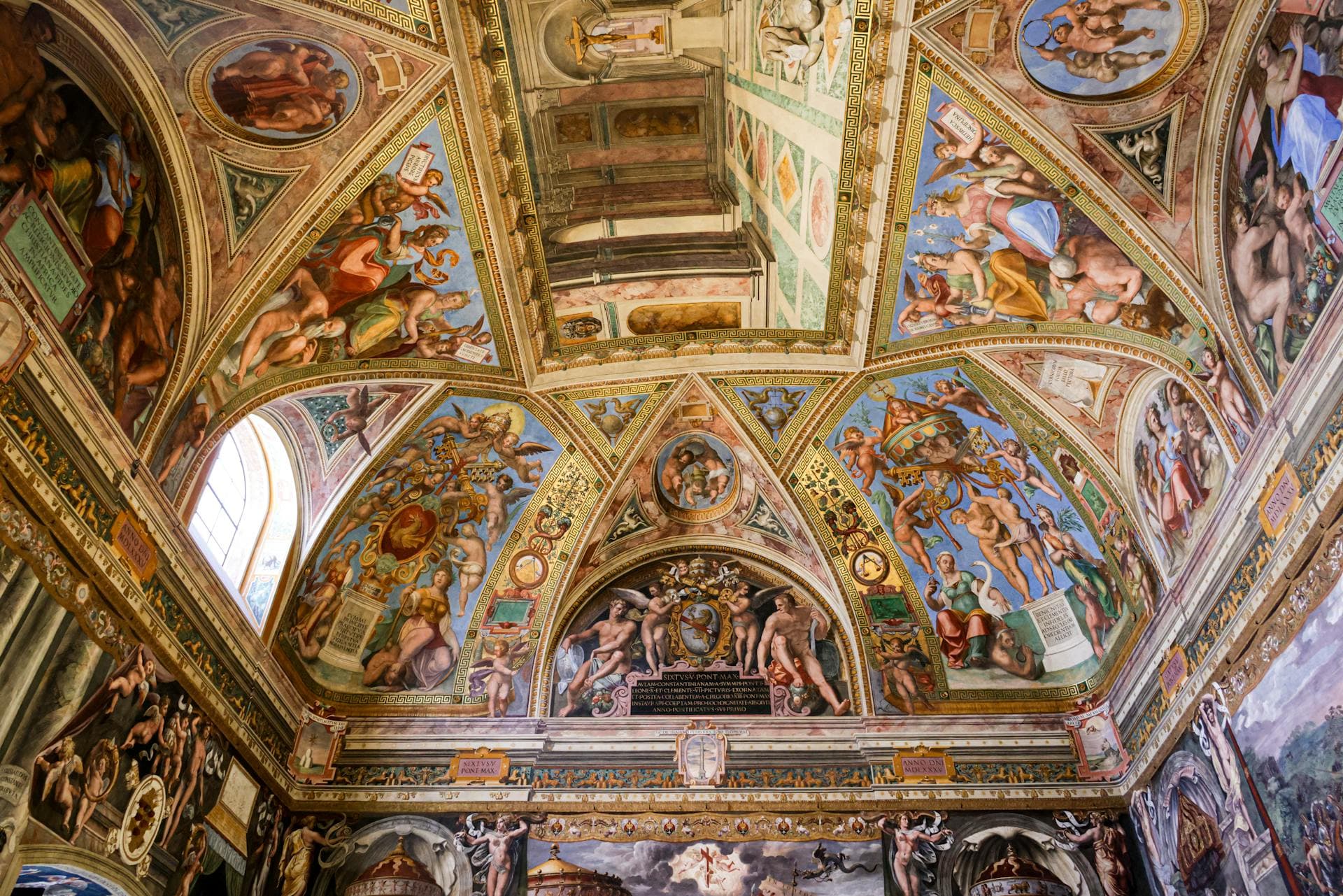
Most people walk into the Sistine Chapel, look up at the ceiling, spot the two famous fingers, and then stand there for twenty minutes not really knowing what else they are seeing. That is not a personal failing. The Sistine Chapel ceiling holds more than 300 painted figures across nine main stories, twelve seated giants, and dozens of side panels — and there is not a single label, sign, or map inside the room to tell you which is which.
There is one more catch that surprises almost everyone. Phones and cameras are banned inside the chapel. You cannot photograph the ceiling and look it up later at your hotel. Whatever you understand while you are standing there is what you take home.
This guide fixes that. It walks through the ceiling the way a licensed Vatican guide would: the layout first, then the nine Genesis panels in order, then The Creation of Adam, the prophets and sibyls, and the huge Last Judgment on the altar wall that most visitors confuse with the ceiling. It also covers the practical side for 2026 — real ticket prices, entry rules, ID checks, and the times of day when the chapel is bearable.
Want the ceiling explained out loud while you are standing under it? Our Vatican Museum, Sistine Chapel & St. Peter's Basilica Tour – Skip the Line puts a licensed local guide with you for the full three hours, at €100 per person (down from €125), with headsets so you can hear every word before you reach the chapel doors.
Sistine Chapel Ceiling: The Facts at a Glance
- Painted by: Michelangelo Buonarroti, alone for most of the job
- Ceiling dates: 1508 to 1512, roughly four years
- Commissioned by: Pope Julius II
- Painted surface: approximately 800 square metres
- Figures: more than 300
- Height above the floor: about 20 metres, so bring patience for your neck
- The Last Judgment (altar wall): a separate job, painted 1536 to 1541 under Pope Paul III
- The room itself: built 1473 to 1481 for Pope Sixtus IV, whose name gives the chapel its own
- Official Vatican Museums entry 2026: €20 at the door, €25 booked online with the €5 reservation fee
- Time most visitors get inside the chapel: 20 to 30 minutes before staff move the room along
The Ceiling Is Not One Painting. It Is Three Layers Stacked Together
This is the single most useful thing to know before you look up. Michelangelo did not paint one giant scene. He painted a structure with three levels, and once you see the levels, the whole ceiling snaps into focus.
Layer 1 — The centre strip: nine scenes from Genesis. Running down the middle of the vault, from the altar end to the entrance end, are nine rectangular panels telling the story from the creation of the universe to Noah. Five are small, four are large. They alternate.
Layer 2 — The sides: twelve seated giants. Along both long edges sit seven Hebrew prophets and five pagan sibyls, each on a painted throne, each with a name written underneath in Latin. These are the largest single figures on the ceiling.
Layer 3 — The corners and edges: everyone else. Twenty nude young men (the ignudi) sit around the smaller Genesis panels holding bronze medallions. Four corner triangles show violent rescue stories from the Old Testament. The curved panels above the windows hold the ancestors of Christ — ordinary-looking families, waiting.
Before Michelangelo, this ceiling was a plain blue sky sprinkled with gold stars, painted by Piermatteo d'Amelia. Julius II wanted the twelve apostles instead. Michelangelo talked him into something far bigger, and got it.
The Nine Genesis Panels, In the Order That Makes Sense
Stand with your back to the altar wall and look up at the strip running away from you. That is the correct reading order — the story starts above the altar and moves toward the door.
- The Separation of Light from Darkness — God alone, twisting in the dark. No earth yet.
- The Creation of the Sun, Moon and Plants — God appears twice in one panel, once facing you and once from behind, in a rush of movement.
- The Separation of Land from Water — God stretched flat across the sky, arms wide.
- The Creation of Adam — the famous one. Details below.
- The Creation of Eve — Eve rises out of the sleeping Adam's side.
- The Fall and the Expulsion — one panel, two moments. Left: the serpent at the tree. Right: the same couple driven out by an angel with a sword.
- The Sacrifice of Noah — an altar, a fire, a family.
- The Flood — the most crowded panel, full of small desperate people carrying bundles up a hill.
- The Drunkenness of Noah — humanity at its lowest, sprawled and shamed.
Here is the detail almost nobody notices. Michelangelo painted these in reverse order, starting at panel nine near the door and finishing at panel one above the altar. Compare The Flood with The Separation of Light from Darkness and you can see it: the early work is crowded and fussy with dozens of little figures, the late work is stripped down to one enormous body filling the frame. He got faster, bolder, and much better as he went. You are watching an artist teach himself in real time.
The Creation of Adam: What Is Actually Happening
Panel four is the reason most people are in the room. It is also the panel most often misread.
The hands do not touch, and that is the whole point. God's finger is fully extended. Adam's hand is limp, wrist bent, arm resting on his knee. Adam has the body of a fully grown man but not yet the will to reach back. The gap is the moment before the spark — not a handshake, not contact, but the instant before life switches on.
Look at who God is carrying. God is not alone. He is wrapped in a red cloak full of angels, and tucked under his left arm is a young woman looking straight out at Adam. Most art historians read her as Eve, already in God's mind, waiting to exist. Others read her as the Virgin Mary, with the child under God's other hand as Christ.
The brain theory. Since 1990, when the physician Frank Lynn Meshberger published the idea, many people have pointed out that the red cloak around God matches the outline of a human brain in cross-section — the brain stem, the frontal lobe, even the pituitary gland. It is a theory, not a confirmed intention, and there is no document where Michelangelo says so. Guides love it because it is a good story. Treat it as an interesting possibility rather than a fact, and it becomes far more interesting.
Adam's ribcage. Look at the anatomy. Michelangelo dissected human bodies as a teenager at the monastery of Santo Spirito in Florence. It shows.
The Prophets and Sibyls: The Twelve You Walked Past
Along the two long sides sit twelve figures, and this is where the ceiling stops being a Bible illustration and becomes something stranger.
The seven prophets are Hebrew: Jonah, Jeremiah, Daniel, Ezekiel, Isaiah, Joel and Zechariah. The five sibyls — the Libyan, Persian, Erythraean, Delphic and Cumaean — are pagan prophetesses from Greek and Roman tradition, women who were believed to have predicted Christ without ever hearing of him. Putting them on equal footing with Hebrew prophets, in the Pope's own chapel, was a deliberate statement about the reach of prophecy.
Two are worth hunting for:
- Jonah, directly above the altar, is the hardest thing on the ceiling. He leans backwards so violently that the vault appears to bend behind him. Michelangelo painted him at the highest, most awkward curve of the ceiling and made the architecture itself look wrong on purpose.
- The Libyan Sibyl twists her whole torso to lift an enormous book, balanced on her toes. Michelangelo's red chalk study for her, drawn from a male model, is one of the most famous drawings in the world.
Each name is painted in Latin on the throne below the figure. If you can read one word, you can identify all twelve.
The Last Judgment: Different Wall, Different Michelangelo
Many visitors leave the chapel thinking the enormous crowded fresco was part of the ceiling job. It was not. Michelangelo came back more than twenty years later and painted the entire altar wall between 1536 and 1541.
The mood had changed completely. Rome had been sacked in 1527. The Reformation had split Europe. The ceiling is about creation; the altar wall is about consequences. Christ stands at the centre with his arm raised, the saved rise on the left, the damned are dragged down on the right toward Charon's boat and the ferryman's oar.
Three things to find:
- The flayed skin. Saint Bartholomew, who was martyred by skinning, holds up a limp human hide. The face on that skin is widely accepted as Michelangelo's own self-portrait — a distorted, exhausted version of himself.
- The man with donkey ears and a snake. Down in the bottom right corner sits Minos, judge of the underworld. Michelangelo gave him the face of Biagio da Cesena, the papal master of ceremonies who had complained the fresco was indecent. When Biagio asked the Pope to have it removed, Paul III is said to have replied that his authority did not extend to hell.
- The painted-on clothing. After the Council of Trent, the artist Daniele da Volterra was ordered to cover the most exposed figures with drapery. Rome nicknamed him Il Braghettone — the breeches maker. Some of those additions were removed during modern restoration; some were kept as part of the wall's history.
2026 update worth knowing: the Vatican Museums carried out an extraordinary maintenance intervention on The Last Judgment between 1 February and 27 March 2026, and announced the work complete on 27 March. Older travel articles that warn about scaffolding on the altar wall are out of date. The fresco is fully visible again.
How One Man Painted a Ceiling in Four Years
He did not lie on his back. This is the most repeated myth about the job. Michelangelo designed his own scaffold — a bracketed platform anchored into holes in the wall, leaving the chapel floor usable below — and he painted standing up, head tilted back, arm above his head, for four years.
He wrote a sonnet about what it did to his body, describing a swollen throat, his spine bent like a bow, his beard pointing at the sky, and paint dripping steadily onto his face. He complained that he had become a bad painter and that he was not in the right place. He was wrong about the painting.
He also nearly lost the whole project early. The first section grew mould, because the Roman plaster mix was too wet in the damp winter. He wanted to quit. The architect Giuliano da Sangallo worked out a drier plaster formula, and the job continued.
He was a sculptor by training and had barely worked in fresco before. Fresco is unforgiving: pigment goes onto wet plaster, and once it dries, corrections are close to impossible. He learned it on the Pope's ceiling, in public, on a deadline.
Popular tours & tickets
Why the Colours Look Nothing Like Old Photographs
If you grew up with dark, smoky, brownish images of the ceiling, the real thing will look almost synthetic — acid greens, hot pinks, bright oranges, sharp lemon yellow. Nothing has been added. Between 1980 and 1994 the Vatican Museums ran a full restoration that removed centuries of candle soot, lamp black, and animal-glue varnish applied by earlier restorers. The ceiling was finished in 1989 and The Last Judgment in 1994.
The result caused a genuine argument among art historians, some of whom believed the cleaning had stripped away final shading layers Michelangelo applied dry. The Vatican's position, backed by the surviving evidence, is that the strong colour is original. When you look up and think it looks too bright to be five hundred years old, that reaction is the restoration doing its job.

Sistine Chapel Rules and Entry Realities in 2026
This is where good preparation saves your visit.
- No photos. At all. No phones, no video, not even holding a phone up. Guards patrol the room and will stop you loudly. The ban protects the frescoes and keeps the room quiet.
- Silence is enforced. Staff periodically call for quiet over a microphone. The chapel is a consecrated space and the site of papal conclaves, not a gallery.
- Dress code, strictly applied. Shoulders and knees covered, for everyone. No sleeveless tops, no shorts above the knee, no low-cut clothing. Hats off indoors. This is checked at the entrance, not at the chapel.
- Tickets are nominative. Vatican Museums tickets are issued in the buyer's name and staff check that the name matches a government photo ID. Bring your passport or national ID card.
- Security screening for everyone. Airport-style checks at the entrance. Large bags, backpacks, tripods and selfie sticks go to the cloakroom.
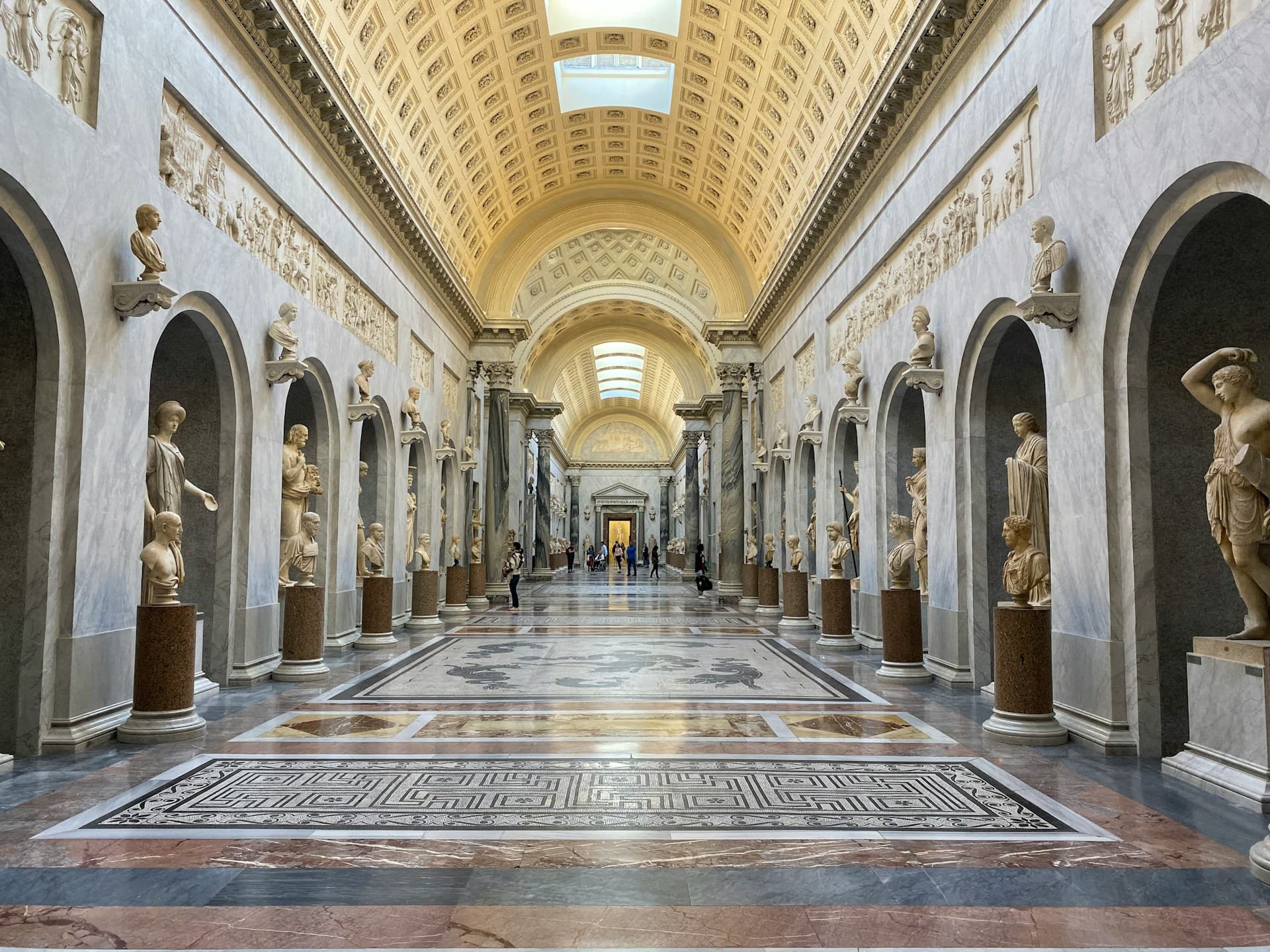
- You cannot go straight to the chapel. There is no separate Sistine Chapel entrance and no separate Sistine Chapel ticket. The chapel sits at the end of a long one-way route through the galleries. Every visitor walks the Gallery of Maps, the tapestries and the Raphael Rooms first.
- Closed on Sundays, except the last Sunday of the month, when entry is free, hours are cut short and queues are extreme. Also closed on several religious and public holidays each year.
When to Go, and Where to Stand
Timing. The chapel is at its worst roughly between 11:00 and 15:00, when the morning tour groups and the walk-in crowd overlap. The two calm windows are the first entry slot of the morning, and the later afternoon once the morning groups have cleared. If Friday evening openings are running in your travel month, they are the quietest experience of all.
Where to stand. There are benches along both side walls, first come first served, and they are worth the wait — sitting is the only comfortable way to study the ceiling for more than five minutes. If the benches are full, move to a long wall rather than the centre of the room. From the middle you fight the crowd; from the side you can lean back and read the panels in sequence.
Practical trick. Learn the nine-panel order before you go in, so that inside the chapel you spend your twenty minutes looking rather than working out what you are looking at.
Do not plan to research inside. No phone means no lookups. Whatever you know when you walk through the door is what you have.
Official Ticket vs Our Tickets and Tours: The Real Price Breakdown
The Vatican's own portal is the cheapest route through the door, and pretending otherwise would be dishonest. The official site is tickets.museivaticani.va, where full entry is €20, or €25 once the €5 online reservation fee is added. The friction is real, though: tickets are non-refundable, they must be issued in the traveller's name, popular morning slots sell out weeks ahead in high season, the checkout has a reputation for payment failures, and there is no human support line if something goes wrong on the day.
Here is exactly what each option costs and buys.
Official Vatican Museums ticket — €25 online (€20 at the door) What you get: entry to the Vatican Museums, access to the Sistine Chapel, a fixed timed slot, all open permanent collections. What you do not get: no guide, no explanation of the ceiling, no headset, no free cancellation, no customer support, and no access to the internal passage from the chapel through to St. Peter's Basilica — that route is reserved for licensed guided groups. Independent visitors exit the museums and walk roughly 15 minutes around the Vatican walls to join the basilica's separate security line.
Vatican Museums & Sistine Chapel Skip-the-Line Tickets — €65 per person What you get: a priority-access entrance ticket that puts you in the reserved-entry lane instead of the general ticket queue, entry to the Sistine Chapel, all permanent collections open that day, instant confirmation, a mobile ticket, free cancellation up to 24 hours before, and a real support team in English if anything goes wrong. Duration around 2 hours, visited at your own pace with no fixed group. Why it costs more than €25: you are paying for a guaranteed reserved slot from a partner allocation that is often still available after the official portal shows sold out, plus a refundable booking instead of a non-refundable one, plus someone to call. Security screening still applies to every visitor, ours included — no ticket in the world skips that.
Vatican Museum, Sistine Chapel & St. Peter's Basilica Tour – Skip the Line — €100 per person (was €125, 20% off) What you get: everything above, plus a licensed live guide in English or German, skip-the-line Vatican Museums tickets, Sistine Chapel entry, St. Peter's Basilica priority entrance, a headset so you hear the guide clearly in crowded galleries, a small group of up to 10 people, a route through the Gallery of Maps, the Raphael Rooms and the Pio-Clementino courtyard, and free cancellation up to 24 hours before. Total duration roughly 3 hours. Meeting point: the office at Via Sebastiano Veniero 15, an 8-minute walk from Ottaviano metro. Why it costs more: the €75 difference over the base official ticket buys the one thing the ceiling actually needs — someone explaining it. Because phones are banned inside the chapel, a live guide who briefs you in the galleries beforehand is the only way to walk in already knowing which panel is which. It also covers the guide's licence, the headset, the small-group cap, and St. Peter's Basilica priority entrance so you are not queuing twice.
Straight comparison: if you only want a door and a time slot, the official €25 is the cheapest and we will not pretend it is not. If you want a refundable booking with support, our €65 ticket is the safer version of the same visit. If you want to understand the ceiling instead of just standing under it, the €100 guided tour is the one that changes the day.
Five Mistakes That Ruin a Sistine Chapel Visit
- Booking a midday slot in July. You will spend the galleries shuffling and reach the chapel at its most packed.
- Wearing shorts and a vest top in August. Rome hits 35°C and the dress code still applies. Cover-ups are checked at the entrance, and there is no exception for the weather.
- Assuming the chapel is at the start. It is at the very end of the route. Budget at least 90 minutes of galleries before you get there, and do not exhaust yourself photographing every corridor.
- Leaving your ID at the hotel. Tickets are nominative and the name must match your document.
- Trying to sneak a photo. Guards catch it constantly. You will be told off in front of a full room and asked to delete it, and you will have spent your best minutes in the chapel looking at a screen instead of the ceiling.
Sistine Chapel Ceiling: Common Questions
How long did the Sistine Chapel ceiling take to paint? About four years, from 1508 to 1512. The Last Judgment on the altar wall was a separate commission and took roughly five more years, from 1536 to 1541.
Did Michelangelo paint lying on his back? No. He painted standing on a scaffold of his own design, with his head tilted back and his arm raised above him. The lying-down version is a myth popularised by later films and books.
Is there a separate Sistine Chapel ticket? No. The chapel is included with every Vatican Museums admission and sits at the end of the standard one-way route. There is no separate entrance and no chapel-only ticket.
Can I take photos of the Sistine Chapel ceiling? No. Photography, filming and phone use are all banned inside the chapel, and the rule is actively enforced. Photography without flash is allowed in most of the rest of the museums.
How long do you actually get inside the chapel? Most visitors get 20 to 30 minutes before staff encourage the room to move on. On very busy days it can feel shorter.
Is the Last Judgment covered by scaffolding in 2026? No. The Vatican Museums completed an extraordinary maintenance intervention on the fresco on 27 March 2026, and the altar wall is fully visible again.
What is the best time of day to see the ceiling? The first entry slot of the morning, or the later afternoon after the morning groups have cleared. Avoid roughly 11:00 to 15:00.
Is a guided tour worth it just for the ceiling? For most first-time visitors, yes — mainly because you cannot use your phone inside. A guide gives you the panel order, the prophets, and the Last Judgment details before you walk in, so the twenty minutes you get are spent looking rather than guessing.
What is the difference between the ceiling and the walls? The ceiling is Michelangelo, 1508 to 1512. The altar wall is Michelangelo again, 1536 to 1541. The long side walls are older, painted 1481 to 1482 by Botticelli, Perugino, Ghirlandaio, Rosselli and Signorelli — a full generation before Michelangelo arrived.
See the Ceiling With Someone Who Can Read It
The Sistine Chapel ceiling rewards preparation more than almost any other sight in Rome. Twenty minutes, no phone, no signs, 300 figures, and a room that will not let you come back tomorrow on the same ticket.
Our travel experts point most first-time visitors to the Vatican Museum, Sistine Chapel & St. Peter's Basilica Tour – Skip the Line at €100 per person: a licensed guide, priority entrance, headsets, a group capped at 10, St. Peter's Basilica included, and free cancellation up to 24 hours before you go.
If you would rather move at your own speed, the Vatican Museums & Sistine Chapel Skip-the-Line Tickets at €65 per person give you the reserved slot and the refundable booking without a fixed group.
Planning the rest of your Vatican day? Add the St. Peter's Basilica Guided Tour with Dome from €25, or check all Vatican City tickets and tours.
Written by
Get Your Roman Tours Team
We are a licensed Rome-based tour operator (Get Your Roman Tours S.R.L.S.). Our guides run tours at these places every week — everything here comes from doing it, not researching it. About us · Ask us anything