Altare della Patria: Cómo visitar el enorme monumento blanco de Roma en 2026

Altare della Patria: Cómo visitar el enorme monumento blanco de Roma en 2026
La mayoría de la gente se encuentra con el Altare della Patria por accidente. Subes por Via del Corso, la calle se abre a la Piazza Venezia y una pared de mármol blanco deslumbrante llena toda la vista. Luego viene la confusión: ¿es una iglesia? ¿Un palacio? ¿Necesitas una entrada? ¿Puedes subir las escaleras?
Aquí tienes la respuesta corta, y es lo que la mayoría de los guías entierran cuatro pergaminos más abajo: el monumento se puede visitar gratis. Solo la terraza de la azotea cuesta dinero. Todo lo demás en esta página son los detalles: los precios reales de 2026, los horarios, las normas que hacen que los guardias detengan a los visitantes y cómo encajar el Vittoriano en un día en Roma sin perder una tarde.
Nuestros expertos en viajes realizan recorridos por la Piazza Venezia la mayoría de los días de la semana, por lo que los horarios y advertencias a continuación provienen de observar lo que realmente sucede en las puertas.
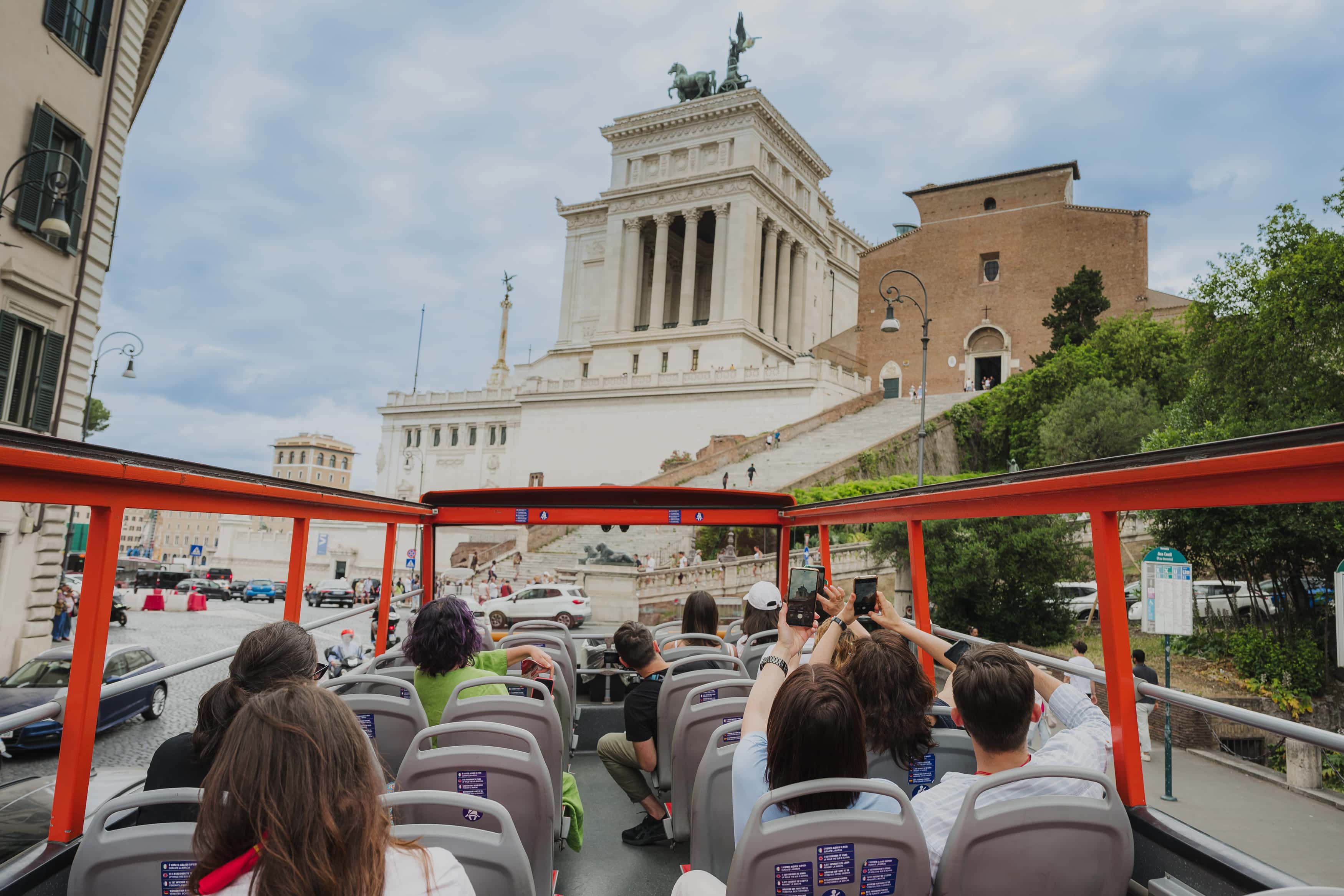
La Piazza Venezia es también donde se cruzan casi todas las rutas turísticas de la ciudad. Si estás organizando un día alrededor de esta zona, el Rome Hop-On Hop-Off Sightseeing Tour desde 18,27 € es la forma más sencilla de llegar a ella y continuar hacia el Coliseo, el Vaticano y la Plaza de España sin tener que averiguar los números de autobús.
El Altar de la Patria de un vistazo
- Dónde: Piazza Venezia, al pie del Monte Capitolino
- Costo de entrada al monumento: Gratis
- Precio de la terraza panorámica: 18 € precio completo, 5 € reducido (visitantes de la UE de 18 a 24 años), gratis para menores de 18 años
- Horario: 9:30 a 19:30 todos los días, última entrada 18:45
- Tiempo necesario: 45 minutos para la parte gratuita, 90 minutos si subes y visitas los museos
- Cerrado: 25 de diciembre
- Mejor hora para hacer fotos: los últimos 90 minutos antes del atardecer, desde las escaleras
- Metro más cercano: Coliseo (Línea B), a unos 10 minutos a pie
Qué es realmente el Monumento a Víctor Manuel II
El edificio tiene tres nombres y la gente los usa todos, lo que es parte de la razón por la que los viajeros se confunden.
- El Monumento a Víctor Manuel II es el nombre oficial. Honra al primer rey de una Italia unificada.
- El Vittoriano es como los romanos llaman a todo el edificio.
- El Altare della Patria — Altar de la Patria — es técnicamente solo la sección central con la diosa Roma y la Tumba del Soldado Desconocido. El nombre se extendió para cubrir todo el monumento.
El arquitecto Giuseppe Sacconi ganó el concurso de diseño en 1882. La construcción comenzó en 1885, el monumento fue inaugurado el 4 de junio de 1911 para el 50 aniversario de la unificación italiana, y el complejo completo no se terminó hasta 1935. Sacconi murió en 1905 y nunca lo vio terminado.
Tiene 81 metros de altura, incluidas las cuadrigas de bronce en la cima, y 135 metros de ancho. La estatua ecuestre de bronce del rey en el centro mide alrededor de 12 metros de altura. Las 16 estatuas a lo largo de la columnata superior representan cada una una región italiana.
Por qué se ve tan diferente de todo lo que lo rodea
El plan era construirlo en travertino, la cálida piedra de color miel utilizada en toda Roma durante dos mil años. El material se cambió por mármol Botticino de Brescia, que es mucho más blanco. Frente a los edificios ocres y de terracota de Roma, el efecto es discordante, y eso nunca se perdonó del todo.
De ahí los apodos. Los romanos lo llaman la torta nuziale (el pastel de bodas) y la macchina da scrivere (la máquina de escribir). Ambos todavía están en uso diario, dichos con una mezcla de irritación y afecto. Si alguien te dice que te encuentres en "la máquina de escribir", este es el lugar.
También hay una historia más dura bajo el mármol. Su construcción implicó la demolición de un gran barrio medieval y renacentista en la ladera norte del Capitolio, incluida la torre de Pablo II. Roma perdió todo un vecindario por esta vista.
Lo que pagas y lo que no pagas
Aquí es donde los competidores pierden a la gente. El Vittoriano no es una entrada única. Es un monumento gratuito con un extra de pago.
Gratis, sin entrada, sin reserva:
- La gran escalera de la Piazza Venezia
- El Altar de la Patria y la Tumba del Soldado Desconocido
- La estatua ecuestre y el Piazzale del Bollettino
- El Pórtico Superior y la columnata
- Terrazza Italia — la amplia terraza de nivel medio donde se encuentra la taquilla, con una vista directa a la Via del Corso
- El jardín del Palacio Venezia justo al lado
De pago:
- La Terraza Panorámica en la cima, junto a las cuadrigas, a la que se accede por dos ascensores de cristal instalados en 2007
- El Museo Central del Risorgimento
- El museo de Palazzo Venezia
- Cualquiera que sea la exposición temporal en curso
Muchos visitantes suben las escaleras gratuitas, se toman fotos y se van perfectamente felices. Es una visita legítima. Los 18 € te compran los últimos 20 metros de altura, y esos últimos 20 metros son lo que cambia la vista de "bonita plaza" al panorama de azotea más amplio del centro de Roma.
Entradas para el Altar de la Patria 2026: Precios Reales
La terraza está gestionada por VIVE (Vittoriano e Palazzo Venezia), parte del Ministerio de Cultura de Italia. Existe una entrada oficial que se vende a través del portal VIVE a 18 € el precio completo, 5 € reducido para visitantes de la UE de 18 a 24 años, gratis para menores de 18 años. Comprarla implica una cuenta separada en un sistema de venta de entradas estatal, controles de identidad en la puerta para quienes reclamen la tarifa reducida y ninguna línea de atención al cliente si sus planes cambian.
La buena noticia, y la diremos claramente porque es verdad: esa entrada de 18 € tiene un valor genuinamente bueno. Es válida durante siete días a partir de la fecha de entrada elegida y abre todos los espacios VIVE: la Terraza Panorámica, el Museo Central del Risorgimento, la sala de banderas del Sacrario delle Bandiere y el museo del Palazzo Venezia, justo al lado. Muy pocas entradas para Roma se mantienen vigentes durante una semana.
Entrada gratuita: el primer domingo de cada mes. Esos boletos solo son válidos el día en sí, no por siete días, y la fila para la terraza esa mañana es la más larga de todo el mes. Llega antes de las 9:30 a. m. o sáltatelo.
Aperturas Nocturnas en 2026
VIVE amplía su horario de tarde-noche del 5 de junio al 27 de septiembre de 2026, en fechas seleccionadas únicamente, de 19:30 a 23:30 con última admisión a las 22:45. Las fechas anunciadas para 2026 son el 5 de junio (solo Palazzo Venezia), el 12 de junio, el 26 de junio, el 10 de julio, el 24 de julio, el 7 de agosto, el 21 de agosto, el 11 de septiembre (solo Vittoriano) y el 27 de septiembre. Las entradas de tarde-noche se venden en taquilla en lugar de online. Roma desde esa terraza al anochecer es lo mejor de esta lista — consulta el sitio web de VIVE antes de planificar, ya que las fechas pueden cambiar.
Comparación de precios: La Entrada a la Terraza frente a la Construcción de un Día Completo en Roma
La entrada a la terraza cubre un edificio. La mayoría de los viajeros que leen esta página tienen uno o dos días en Roma y necesitan el resto del día para trabajar también. Aquí está la comparación honesta.
Opción 1 — Entrada oficial a la terraza VIVE
- Precio: 18 € tarifa completa, 5 € tarifa reducida (UE, 18–24 años), gratis menores de 18 años
- Obtienes: la Terraza Panorámica, Museo Centrale del Risorgimento, Sacrario delle Bandiere, museo de Palazzo Venezia, exposición temporal, válido 7 días
- No se incluye: guía, transporte hacia o desde la Piazza Venezia, entrada a ninguna otra atracción de Roma, ni número de asistencia si algo sale mal.
- Reservado a través de: el portal VIVE, con registro de cuenta y verificación de identidad a la tarifa reducida
Opción 2 — Entrada a la terraza más nuestro Tour Turístico Hop-On Hop-Off de Roma
- Nuestro precio: desde 18,27 €; el Daily Ticket – Hop-On Hop-Off cuesta 23,02 €, en lugar de 28,42 €
- Disfruta de: rutas en autobús descapotable de dos pisos que sirven la Piazza Venezia y el Vaticano, las áreas de la Plaza de España y el Coliseo, comentarios de audio a bordo, paradas ilimitadas con el ticket diario, confirmación instantánea, ticket móvil, cancelación gratuita disponible
- Por qué cuesta más que un billete de metro: te deja al pie del monumento sin planificación de ruta y te lleva a la siguiente atracción en lugar de dejarte tirado en la Piazza Venezia con un mapa.
- Total para el día con la terraza: alrededor de 41,29 € para dos vistas muy diferentes de la misma ciudad
Opción 3 — Entrada a la terraza más la ciudad antigua que se domina
- La mejor mitad de la vista desde la terraza es el Foro Romano y el Coliseo. Nuestro Tour guiado del Coliseo con Foro Romano y Monte Palatino cuesta 72,17 €, en lugar de 80,19 €.
- Obtendrás: un tour de 3 horas, entrada prioritaria al Coliseo, un guía experto profesional con licencia, Foro Romano y Monte Palatino incluidos, confirmación instantánea, cancelación gratuita disponible
- Prefieres ir a tu propio ritmo? El Boleto para el Coliseo con audioguía cuesta 31,50 €, en lugar de 35 €, cubriendo el Coliseo, el Foro y el Monte Palatino con comentarios en tu oído.
Actualmente no vendemos la entrada a la terraza del Vittoriano en sí, y no vamos a pretender lo contrario. Lo que vendemos es el resto del día a su alrededor, a precios que puedes comprobar en un solo clic.
Lo que realmente verás desde la terraza
De pie en la cima, de espaldas a la Via del Corso:
- Recto y ligeramente a la derecha: el Foro Romano, la Columna de Trajano y los Foros Imperiales, dispuestos en plano como una maqueta de arquitecto
- Justo ahí, a lo lejos: el Coliseo
- A la izquierda: las cúpulas del centro histórico, con San Pedro elevándose detrás de ellas
- Detrás: Via del Corso, una línea recta hacia la Piazza del Popolo
- Abajo: el tráfico dando vueltas en la Piazza Venezia, que es más entretenido de lo que suena
He aquí el argumento práctico. La subida a la cúpula de San Pedro implica 551 escalones y un pasaje estrecho y curvo. La terraza del Vittoriano incluye un ascensor de cristal. Si tiene problemas de rodillas, de calor o niños que considerar, esta es la vista panorámica más fácil de Roma — y es el único mirador importante que le ofrece el Foro desde arriba.
Consejo fotográfico de nuestros guías: la terraza está orientada al sol la mayor parte de la tarde, por lo que las fotos del mediodía salen quemadas. Vaya en los últimos 90 minutos antes del cierre. El mármol se vuelve dorado y las sombras del Foro se alargan.
El Cambio de Guardia ante la Tumba del Soldado Desconocido
Esta es una ceremonia real, no un espectáculo turístico, y es gratis.
La Tumba del Soldado Desconocido fue colocada bajo la estatua dorada de la diosa Roma el 4 de noviembre de 1921. El cuerpo fue elegido el 26 de octubre de 1921 por Maria Bergamas, una mujer de Gradisca d'Isonzo cuyo único hijo murió en la Primera Guerra Mundial y nunca fue encontrado. Pasó ante once ataúdes no identificados y se detuvo en uno.
Dos soldados custodian la llama eterna día y noche. El cambio de guardia ocurre cada hora, en punto, durante el horario de apertura. Dura unos minutos. Colóquese al nivel del altar mismo, no en los escalones inferiores, y verá todo el espectáculo.
Compórtate en consecuencia. Este es un monumento conmemorativo de guerra activo. Las voces altas, las fotos posadas en los escalones del altar y sentarse harán que te echen, y con razón.
Reglas que hacen que los visitantes se detengan en el Vittoriano
Hay guardias presentes y hacen cumplir estas normas. Nada de esto es sutil.
- No sentarse en los escalones del monumento. Esto sorprende a casi todos. Los escalones del Vittoriano no son la Plaza de España y no son un lugar de picnic.
- No se permite comida ni bebida dentro de los espacios VIVE. Termina tu café antes de pasar.
- Los baños no son gratuitos a menos que tenga un boleto VIVE. Con un boleto, escanee un código QR. Sin boleto, son 1 € por persona, o muestra un recibo de la cafetería.
- Las bolsas grandes pasan por el control de seguridad en la entrada de la terraza.
- Traiga su DNI si ha reservado la entrada reducida de 5 €. Sin documento, no hay tarifa reducida: pagará la diferencia en la puerta.
- Los drones no están permitidos sobre la Piazza Venezia.
Cómo llegar a la Piazza Venezia
No hay estación de metro en la Piazza Venezia. Esto confunde a los primerizos que asumen que la plaza más grande del centro de Roma debe tener una. No la tiene — una estación de la Línea C todavía está en construcción.
- Metro: Coliseo (Línea B), luego una caminata de 10 minutos por la Via dei Fori Imperiali. Vale la pena hacer este paseo a propósito; el Foro estará a tu izquierda durante todo el trayecto.
- Autobús: La Piazza Venezia es una de las intersecciones más concurridas de Roma. Las rutas 40, 62, 64, 70 y 170 la utilizan, y la 64 va desde Termini hacia el Vaticano.
- Hop-on hop-off: las rutas turísticas sirven directamente la Piazza Venezia, que es la opción menos estresante si llegas con equipaje o niños pequeños.
Tiempos de caminata desde la Piazza Venezia:
- Columna de Trajano — 2 minutos
- Museos Capitolinos y Piazza del Campidoglio — 3 minutos
- Santa Maria in Aracoeli — 2 minutos (subiendo unas escaleras muy empinadas)
- Panteón — 8 minutos
- Fontana di Trevi — 10 minutos
- Coliseo — 12 minutos
Construyendo el Vittoriano en medio día
El monumento no merece un día entero, y tratarlo como tal es el error de planificación más común. Merece una franja horaria.
Versión de mañana (unas 4 horas):
- 9:30 — entrada gratuita, recorre el nivel del Altar, presencia el cambio de guardia de las 10:00
- 10:15 — ascensor de cristal hasta la Terraza Panorámica, 30 minutos arriba
- 11:00 — bajando por el lado de Aracoeli, subiendo a la Piazza del Campidoglio
- 11:45 — 8 minutos a pie hasta el Panteón
La Entrada al Panteón de Roma con audioguía multilingüe por 10 € combina perfectamente con esta ruta, ya que el Panteón ahora cobra entrada y el comentario de audio significa que no estará parado debajo del óculo preguntándose qué está mirando.
Versión de última hora de la tarde (aproximadamente 3 horas):
- 16:00 — monumento gratuito y el cambio de guardia
- 16:45 — terraza, quédate para el cambio de luz
- 18:00 — paseo hasta la Fontana di Trevi mientras la multitud disminuye
Qué hay dentro: Los museos que nadie menciona
Tu presupuesto de 18 € también cubre tres interiores, y las expectativas deben ser calibradas.
- Museo Central del Risorgimento: la historia de la unificación italiana, contada a través de banderas, armas, cartas y uniformes. Es significativo si conoces la historia y delgado si no. Deja 30 minutos.
- Sacrario delle Bandiere — un salón de banderas militares italianas, incluyendo estandartes navales. Corto, tranquilo y más conmovedor de lo que suena.
- Museo de Palazzo Venezia — justo al lado, y el éxito inesperado. Un palacio renacentista con una colección genuina, y suele estar casi vacío mientras mil personas fotografían el mármol del exterior. Su Grande Giardino se puede visitar gratis.
Preguntas frecuentes
¿El Altare della Patria es gratis? Sí. Entrar en el monumento, estar en el Altar de la Patria, ver la Tumba del Soldado Desconocido y presenciar el cambio de guardia no cuestan nada. Solo la Terraza Panorámica del nivel superior y los museos requieren una entrada.
¿Cuánto cuesta el ascensor del Monumento a Víctor Manuel II? La entrada a la Terraza Panorámica, que incluye el ascensor de cristal, cuesta 18 € el precio completo. El precio reducido es de 5 € para visitantes de la UE de entre 18 y 24 años. Los menores de 18 años entran gratis. La entrada es válida durante siete días.
¿Necesito reservar la terraza con antelación? Normalmente no. El Vittoriano no se agota como el Coliseo o los Museos Vaticanos. La excepción es el primer domingo gratuito del mes y las tardes de verano entre las 14:00 y las 17:00, cuando la cola para la Terrazza Italia puede ser de 20 a 30 minutos.
¿Cuánto dura una visita? Alrededor de 45 minutos para las áreas gratuitas, incluido el cambio de guardia. Alrededor de 90 minutos si toma el ascensor y visita el museo del Risorgimento. Añada otra hora para el Palazzo Venezia.
¿Se puede subir a la cima en lugar de usar el ascensor? No. Los dos ascensores de cristal son la única forma de subir a la Terraza Panorámica. Las escaleras te llevan hasta el nivel gratuito de la Terrazza Italia, que tiene su propia buena vista de la Piazza Venezia y una cafetería.
¿Por qué los romanos lo llaman el pastel de bodas? Debido al mármol blanco de Botticino y su forma escalonada y apilada. La macchina da scrivere — la máquina de escribir — es el otro apodo común, por la columnata de techo plano y las columnas verticales.
¿Es el Vittoriano lo mismo que el Monumento a Víctor Manuel II? Sí. Vittoriano, Altare della Patria y Monumento a Víctor Manuel II se refieren al mismo edificio en la Piazza Venezia.
¿Vale la pena la vista por 18 €? Para un visitante primerizo, nuestros expertos en viajes dicen que sí, principalmente porque es el único mirador alto que muestra el Foro Romano desde arriba, y porque la entrada dura una semana e incluye el Palazzo Venezia. Si tienes un presupuesto ajustado, el nivel gratuito de Terrazza Italia y la sección gratuita del Altar aún te brindan la mayor parte de la atmósfera.
Planifica el resto de tus días en Roma
El Vittoriano es una parada corta y de gran impacto. Es lo que lo rodea lo que gana o pierde un viaje a Roma.
- Llegue a él y a todo lo demás sin planificar la ruta: Rome Hop-On Hop-Off Sightseeing Tour desde 18,27 €, o el Daily Ticket – Hop-On Hop-Off a 23,02 € (antes 28,42 €)
- Adéntrate en las ruinas que admirabas desde lejos: Visita guiada del Coliseo con Foro Romano y Monte Palatino por 72,17 € (antes 80,19 €), o la visita autoguiada Entradas al Coliseo con audioguía por 31,50 € (antes 35 €)
- A ocho minutos: Roma: Entrada al Panteón con audioguía multilingüe a 10 €
- Algo más extraño para una hora libre: Roma: Cripta de los Capuchinos, Entrada sin colas con audioguía a 12 €
Cada reserva viene con confirmación instantánea, un billete móvil y cancelación gratuita disponible en la mayoría de las experiencias. Explora todos los tours y entradas de Roma →
Popular tours & tickets
Escrito por
Get Your Roman Tours Team
Somos un turoperador con licencia con sede en Roma (Get Your Roman Tours S.R.L.S.). Nuestros guías realizan visitas en estos lugares cada semana: todo lo que hay aquí viene de la experiencia, no de la investigación. Sobre nosotros · Pregúntanos lo que quieras