The Pantheon in Rome: Inside the Best-Preserved Ancient Roman Building
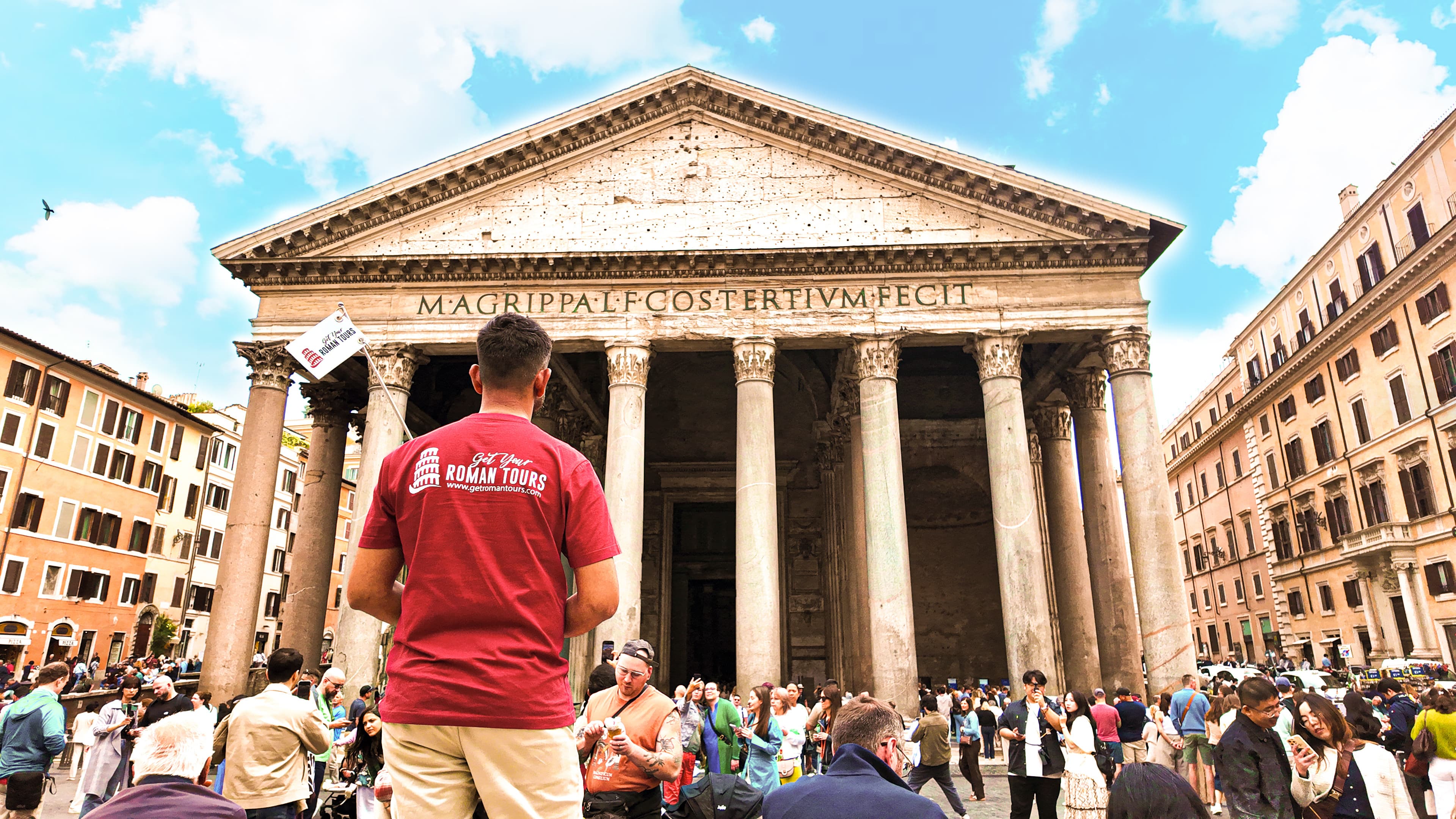
The Pantheon has stood, in essentially its current form, since around 113-125 AD, making it not just an ancient Roman building but the single best-preserved one anywhere in the world. Unlike the Colosseum or the Forum, which survive as partial ruins requiring real imagination to picture intact, the Pantheon's dome, columns, and interior are still substantially what a Roman visitor would have seen nearly 1,900 years ago, a genuinely rare thing to be able to say about any structure this old.
Its survival largely comes down to one decision: in 609 AD, the building was consecrated as a Christian church, dedicated to St. Mary and the Martyrs. That single act of repurposing protected it from the demolition, quarrying, and neglect that destroyed so much of ancient Rome over the following centuries, since a working church wasn't treated as fair game for building materials the way an abandoned pagan temple would have been.
The dome that still holds records
The Pantheon's dome remains the largest unreinforced concrete dome in the world, no steel rebar, no internal skeleton, just carefully proportioned Roman concrete that varies in density and aggregate from base to apex (heavier materials lower down, lighter pumice near the top) to manage the structural load. The central oculus, a 9-meter circular opening at the dome's peak, is the building's only major light source and remains permanently open to the sky, meaning rain falls directly onto the marble floor below during storms and drains away through a system of barely visible holes in the floor.
Architects and engineers still study the Pantheon's dome today, partly because no one fully agrees on every detail of how the Romans achieved such a span without modern reinforcement, and partly because the building's nearly two-thousand-year structural integrity is itself a kind of ongoing proof of concept for Roman concrete engineering.
What 'Pantheon' actually means
The name derives from Greek, roughly translating to 'temple of all the gods', its original dedication under Emperor Hadrian (who rebuilt it after an earlier version by Marcus Agrippa burned down) was to the full pantheon of Roman deities rather than any single one. The inscription across the entrance portico still credits 'M. Agrippa,' referring to the original builder, even though the building you're standing in is actually Hadrian's later reconstruction, a detail that occasionally confuses visitors reading the Latin literally.
Inside the building
- The oculus, the open hole at the dome's apex, the building's only light source
- The original Roman marble floor, still patterned in its ancient design
- The tomb of Raphael, the Renaissance painter, along with several Italian kings
- Coffered ceiling panels inside the dome, which reduce weight while preserving structural strength
- The massive granite columns of the entrance portico, each a single piece of stone transported from Egypt
Visiting practically
Entry now requires a ticket, a relatively recent change after centuries of free access, proceeds go toward the building's maintenance as both an active church and a major monument. Since it remains a consecrated church, modest dress (covered shoulders and knees) is expected, and visitors should keep voices low and avoid visiting during active Mass times if simply sightseeing. A guided tour with entry included is the easiest way to skip the worst of the line and get context on details easy to miss otherwise.
-
Dress modestly, shoulders and knees covered, as it's an active church
-
Check Mass times before visiting if you only want to sightsee
-
Look up immediately upon entering, the dome's scale is best appreciated from directly underneath
-
Bring a light layer if visiting during rain, the open oculus means weather affects the interior
Why the Pantheon feels different from other ancient sites
Most ancient Roman sites ask visitors to mentally reconstruct what's missing. The Pantheon doesn't, walking through the original bronze doors (themselves ancient, among the oldest large bronze doors still in use anywhere) into a space whose proportions and decoration are still substantially intact creates an unusually direct sense of connection to the ancient world, without the usual barrier of ruins and reconstructed-on-paper layouts. It's frequently cited by architects and historians as one of the most influential buildings in Western architectural history, having directly inspired domed structures for centuries afterward, including Brunelleschi's dome in Florence and, much later, the design of the US Capitol rotunda.
The piazza outside
Piazza della Rotonda, the square fronting the Pantheon, is lively with cafes, street performers, and a central fountain topped by an Egyptian obelisk, itself another piece of ancient history relocated here centuries after the Pantheon's construction. Sitting at one of the piazza's cafes for a coffee while looking at the Pantheon's facade is a popular and pleasant way to take in the building without needing to enter, though the interior is genuinely worth the ticket price for anyone with even a casual interest in architecture or history.
FAQ
Is the Pantheon free to visit?
No longer, a ticket is now required, following a policy change after centuries of free entry. The fee goes toward maintaining the building.
How long should I spend inside?
30-45 minutes is typically enough to take in the dome, floor, and side chapels properly, though architecture enthusiasts often linger longer.
Can I attend Mass at the Pantheon?
Yes, it remains an active church with regular Mass times, check current schedules locally, since these can change.
Why is there a hole in the roof?
The oculus was a deliberate design choice, not damage, it provides the building's main light source and was likely also symbolically significant, connecting the temple's interior to the sky.
Hadrian's reconstruction and why it matters
The original Pantheon, built by Marcus Agrippa around 27 BC, burned down in 80 AD and was struck by lightning and burned again in 110 AD. What stands today is essentially entirely Hadrian's rebuild, completed around 125 AD, though he chose to preserve Agrippa's original inscription on the entrance rather than claim credit for himself, an unusual act of modesty for a Roman emperor, and one that's led to centuries of minor confusion among visitors who assume Agrippa built the building they're looking at. Hadrian was known for this kind of architectural patronage across the empire, and the Pantheon represents arguably his most ambitious and successful project, blending Greek-inspired temple-front design with an entirely Roman engineering solution in the dome behind it.
How the proportions were calculated
One of the Pantheon's most studied features is the precise mathematical relationship between its height and the diameter of its dome, both measure approximately 43 meters, meaning a perfect sphere could theoretically fit exactly inside the building's interior space. This wasn't accidental; Roman architects worked from established proportional systems, and the Pantheon represents one of the clearest surviving examples of those principles applied at full architectural scale. Visiting with this in mind changes how the space reads, rather than just an impressively large room, it becomes a deliberately calculated geometric statement, designed to feel mathematically perfect rather than simply big.
Comparing the Pantheon to later domed buildings
The Pantheon's direct architectural influence is unusually traceable. Filippo Brunelleschi studied it closely before designing the dome of Florence Cathedral in the 15th century, and Renaissance and later architects across Europe and eventually America continued referencing its proportions and engineering centuries afterward. The dome of the US Capitol, numerous European cathedrals, and countless smaller domed structures all sit, in some lineage sense, downstream of this one Roman building, making it one of the most architecturally influential single structures anywhere in the world, not just a well-preserved ancient curiosity.
Visiting alongside the rest of the historic center
The Pantheon's location, a short walk from Piazza Navona and the Trevi Fountain, makes it a natural anchor point for a historic-center walking route. Many visitors combine all three in a single afternoon, and a guided walking tour covering this exact loop adds context that's easy to miss reading plaques alone, particularly the relationships between these sites and how the neighborhood around them developed over centuries of continuous use.
The bronze doors and what they tell us
The Pantheon's original bronze entrance doors are still in use today, making them among the oldest functioning large bronze doors anywhere in the world. Each door leaf weighs several tons, and the bronze-casting techniques required to produce structures this large in antiquity were themselves a significant technical achievement, separate from the engineering challenge of the dome above. Several other ancient bronze doors were melted down over the centuries for reuse in other projects, including, reportedly, some that ended up incorporated into St. Peter's Basilica, which makes the Pantheon's surviving originals an unusually rare case of large-scale ancient metalwork surviving intact in its original location and function.
Tombs and burials inside
Beyond Raphael, whose tomb bears a Latin epitaph reportedly composed by a contemporary cardinal, the Pantheon holds the remains of several Italian monarchs, including King Victor Emmanuel II and King Umberto I, reflecting the building's role not just as an ancient temple and later church but as a site of national significance during and after Italy's 19th-century unification. This layering (pagan temple, Christian church, royal mausoleum) across a single continuously used building is part of what makes the Pantheon such an unusually dense historical site relative to its modest physical footprint.
Light and time inside the dome
Because the oculus is a fixed opening with no glass or covering, the patch of sunlight it casts moves visibly across the interior over the course of a day, functioning loosely like an oversized sundial. Visitors who happen to be inside around solar noon on April 21st (traditionally celebrated as Rome's founding anniversary) can sometimes see the light align directly with the entrance doorway, an effect some historians believe may have been at least partly intentional in the building's original orientation, though this remains debated rather than definitively proven.
Common questions visitors ask at the entrance
Staff at the entrance field a fairly consistent set of questions: whether photography is allowed (yes, for personal non-commercial use, though tripods and professional setups may need separate permission), whether there's an elevator or stair access concern (the main floor is fully accessible at ground level, since there's no upper viewing area open to the public), and how the ticketed entry differs from the building's earlier free-access era that many repeat visitors to Rome remember from previous trips. Explaining this last point sometimes takes a moment, since plenty of travel guides and blogs written before the policy change still describe the Pantheon as free, leading to occasional confusion at the gate.
The obelisk and fountain in the piazza
The fountain in Piazza della Rotonda, designed in the late 16th century by Giacomo della Porta, was later topped with an Egyptian obelisk originally brought to Rome in antiquity and relocated to this spot in the 18th century, yet another example of ancient Egyptian monuments scattered across Rome's piazzas, repurposed by later popes as decorative additions to fountains and squares throughout the city. Rome has more ancient Egyptian obelisks than Egypt itself retains in its original locations, a curious historical footnote that becomes more noticeable the more piazzas you visit.
What a guide adds that a plaque can't
Self-guided visitors reading the Pantheon's information panels alone often miss some of the building's more subtle details, the precise reasoning behind the dome's stepped exterior rings (which help distribute structural load while remaining invisible from inside), the specific later additions made during its centuries as a church, and the small but telling differences between Hadrian's rebuild and Agrippa's lost original, as understood through archaeological evidence rather than the misleading entrance inscription. A knowledgeable guide threading these details together tends to leave visitors with a meaningfully deeper appreciation than reading panels alone typically provides.
Seasonal light and the best time to visit
Because the oculus is the building's primary light source, the interior's mood changes noticeably with the weather and time of day, bright midday sun creates a sharp, dramatic shaft of light against the dome's coffered ceiling, while overcast days produce a softer, more diffuse illumination throughout the space. Early morning, shortly after opening, tends to offer the best balance of good light and manageable crowds, before tour groups and midday visitors arrive in volume.
Engineering details that still impress specialists
Beyond the varying concrete density already mentioned, the Pantheon's dome uses coffers (the recessed square panels visible across its interior surface) both decoratively and structurally, reducing the dome's overall weight without compromising strength, a technique that requires precise calculation to avoid weakening the structure rather than reinforcing it. The building's walls, roughly 6 meters thick at the base, taper and incorporate internal relieving arches and voids invisible from either the interior or exterior, distributing the dome's outward thrust in ways that took modern engineers and architectural historians considerable study to fully map and understand, given that the Romans left no surviving written engineering specifications for the building.
How the Pantheon survived where so much else didn't
It's worth dwelling once more on just how unusual the Pantheon's survival really is, because the contrast with the rest of ancient Rome is genuinely stark. The Forum, the Baths of Caracalla, and dozens of other major Roman structures were stripped, quarried, or simply left to collapse once their original function disappeared and no one had a strong institutional reason to maintain them. The Pantheon's conversion into an actively used church gave it exactly that reason, continuously, for over 1,400 years, a reminder that the difference between an ancient ruin and an ancient building still standing whole is often less about engineering and more about whether someone kept caring for it, generation after generation, long enough for that care to become its own kind of tradition.
Sound and acoustics inside the dome
Visitors who linger inside the Pantheon often notice the building's distinctive acoustics, voices, footsteps, and the murmur of crowds carry and echo in ways shaped directly by the dome's geometry, producing a soft, layered reverberation unlike most enclosed spaces of comparable size. This effect isn't incidental; circular domed spaces tend to focus and distribute sound in predictable ways, and while there's no firm evidence the Romans designed the Pantheon's acoustics deliberately, the effect has been noted and occasionally exploited for sound installations and musical performances held inside the building on special occasions over the centuries.
One last detail worth knowing
Look closely at the floor as you walk through, and you'll notice small drainage holes positioned to handle rainwater falling through the oculus, a detail so practical and unobtrusive that most visitors walk straight over it without ever noticing, despite it solving a problem the building has faced literally every time it has rained for nearly two thousand years.
Final word
Few buildings anywhere let you stand inside something this old, this intact, and this architecturally significant all at once. The Pantheon rewards visitors who slow down, look up, and spend a little time understanding what they're looking at rather than treating it as a quick photo stop between the Trevi Fountain and Piazza Navona.
See it with a guide who can point out details easy to miss. Book a Pantheon guided tour.