La Piazza Barberini et la Fontaine des Abeilles
La Piazza Barberini se trouve à un carrefour animé et chargé de circulation près de la Via Veneto et de l'extrémité supérieure du quartier de la fontaine de Trevi, et la plupart des visiteurs la vivent comme rien de plus qu'une station de métro et un endroit pour traverser la rue. C'est dommage, car deux des plus belles et plus ludiques fontaines de Gian Lorenzo Bernin se trouvent juste ici, commandées par l'une des familles baroques les plus puissantes de Rome (les Barberini) dont l'emblème, trois abeilles, se repère discrètement sculpté dans la pierre si vous savez où regarder.
Pourquoi les Fontaines Comptaient comme Déclarations Politiques
Il vaut la peine de comprendre pourquoi un pape du XVIIe siècle investirait autant dans des fontaines publiques, plutôt que de les traiter comme de purs à-côtés décoratifs. La Rome de la Renaissance et de l'ère baroque souffrait de siècles d'aqueducs antiques endommagés ou non fonctionnels, et restaurer et étendre l'approvisionnement en eau de la ville était l'une des choses les plus politiquement précieuses et visiblement impressionnantes qu'un pape puisse faire pour les Romains ordinaires ; une eau propre et fiable délivrée à travers une fontaine publique magnifiquement sculptée servait à la fois d'infrastructure civique véritable et de publicité permanente pour la générosité et la faveur divine du pape régnant. Les fontaines d'Urbain VIII à la Piazza Barberini, pas moins que les projets antérieurs de restauration d'aqueducs de Sixte V ailleurs dans la ville, concernaient autant la légitimité politique que l'art.
La Famille Barberini et leurs Abeilles
La place tire son nom du Palazzo Barberini voisin, dont la construction commença en 1627 pour la famille du pape Urbain VIII, né Maffeo Barberini, dont la papauté (1623-1644) coïncida avec l'une des périodes les plus somptueuses de mécénat artistique baroque de l'histoire romaine. Les armoiries des Barberini présentaient trois abeilles, et ce symbole devint une sorte de signature récurrente à travers les commandes de la famille, apparaissant sur des fontaines, des fresques de plafond, et des détails architecturaux dans tout le quartier, un rappel subtil mais persistant de combien du boom de construction du XVIIe siècle du centre de Rome remonte à une seule famille papale ambitieuse.
Ce que les barbares n'ont pas fait, les Barberini l'ont fait — une pique contemporaine visant l'habitude de la famille de dépouiller les monuments antiques, y compris le Colisée et l'Arc de Constantin, pour en tirer des matériaux de construction et du bronze.-
Ce jeu de mots mordant, encore cité par les guides romains aujourd'hui, capture l'héritage mitigé des Barberini : des mécènes extraordinaires de l'art baroque, mais aussi des pillards opportunistes des monuments survivants de la ville antique, faisant fondre le bronze du portique du Panthéon, entre autres sources, pour couler des canons et créer le baldaquin du Bernin à l'intérieur de la Basilique Saint-Pierre.
La Fontana del Tritone
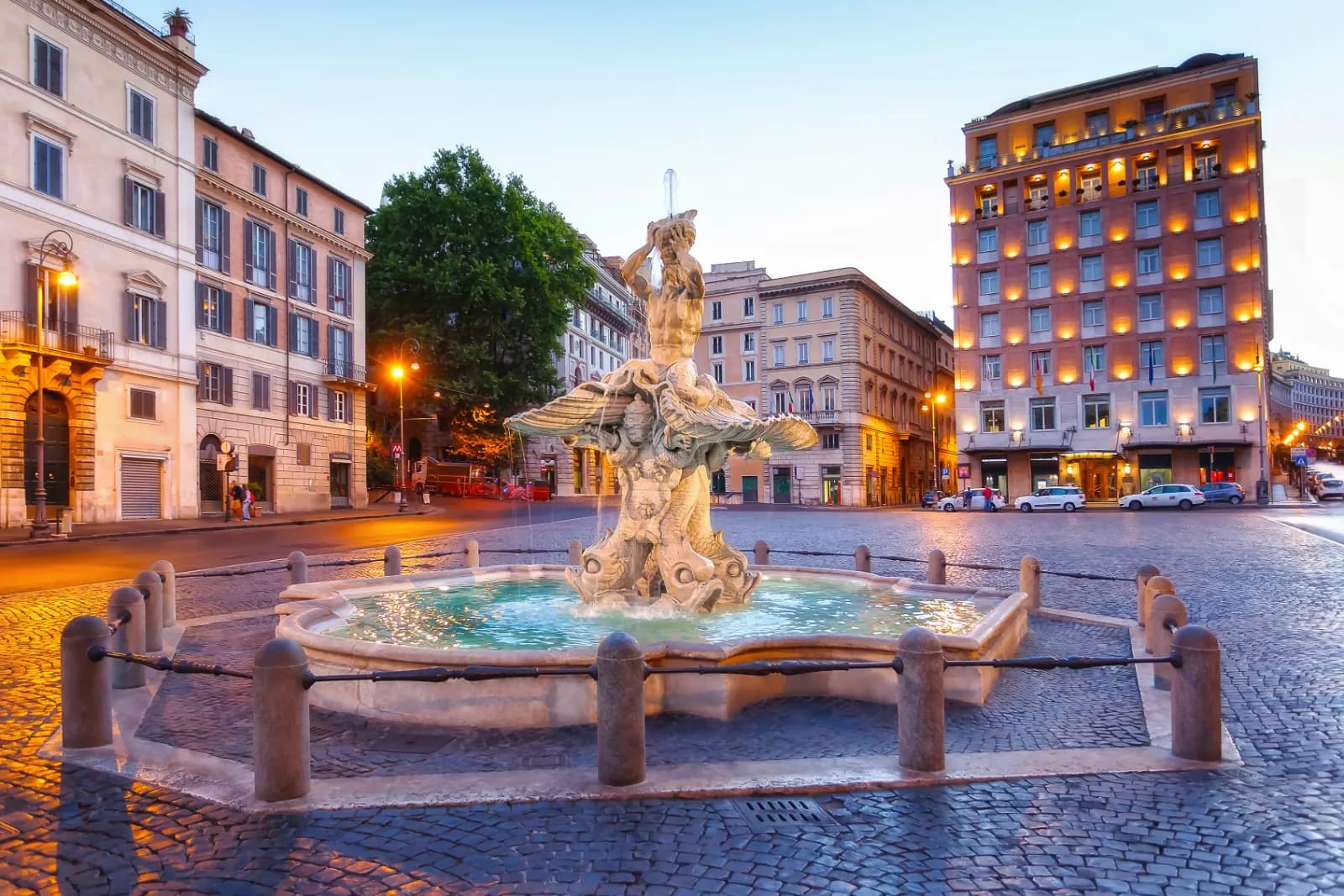
Au centre de la place se dresse la Fontana del Tritone (Fontaine du Triton) du Bernin, achevée vers 1643 et considérée comme l'une de ses commandes séculières les plus inventives. Quatre dauphins, leurs queues entrelacées, soutiennent une coquille Saint-Jacques ouverte sur laquelle un Triton musclé s'agenouille, tête rejetée en arrière, soufflant dans une conque d'où l'eau jaillissait autrefois dramatiquement dans les airs. Les armoiries papales des Barberini, complètes avec leurs abeilles caractéristiques, décorent la base, un signal clair de mécénat imprimé directement sur l'œuvre d'art publique.
La composition dynamique et presque théâtrale de la fontaine (une figure mythologique saisie en plein mouvement plutôt qu'en repos statique) illustre le style sculptural baroque que le Bernin a plus fait que quiconque pour définir, traitant les fontaines non pas comme de simples éléments d'eau mais comme des décors de scène miniatures figés à un moment de drame maximal.
La Fontana delle Api, la Fontaine des Abeilles
À une courte distance à pied, nichée au pied de la Via Veneto sur le bord de la place, se trouve la plus petite et facilement négligée Fontana delle Api (Fontaine des Abeilles), également du Bernin et achevée un peu plus tard, vers 1644. Façonnée comme une coquille Saint-Jacques avec trois abeilles perchées à son bord semblant boire l'eau en dessous, elle fut à l'origine construite comme fontaine à boire publique pour les Romains ordinaires et leurs animaux, une commande bien plus modeste et civique que la Fontaine du Triton, mais qui porte la même signature Barberini indéniable.
Une inscription sur la fontaine indiquait à l'origine qu'elle avait été achevée dans la 21e année du pontificat d'Urbain VIII, un détail qui, à cause d'une erreur de tailleur de pierre confondant les chiffres romains, suggéra brièvement et curieusement que la fontaine avait été construite un an après la mort réelle du pape. L'erreur fut finalement corrigée, mais elle reste une petite note de bas de page charmante dans l'histoire de la fontaine, répétée par les guides comme un exemple de comment même les commandes papales monumentales n'étaient pas à l'abri d'erreurs humaines ordinaires.
Ce que "Baroque" Signifie Réellement dans ce Contexte
Le terme baroque, souvent utilisé de manière lâche pour décrire tout ce qui est orné, se réfère plus précisément à un mouvement artistique spécifique qui prospéra à Rome à peu près entre 1600 et 1750, caractérisé par un mouvement dramatique, une intensité émotionnelle, des effets d'éclairage théâtraux, et un brouillage délibéré des frontières entre la sculpture, l'architecture, et l'art scénique. Les fontaines de la Piazza Barberini sont des exemples classiques des qualités déterminantes du style : des figures saisies en pleine action plutôt que posées statiquement, l'eau traitée comme un matériau sculptural dynamique plutôt qu'un élément décoratif passif, et une composition globale conçue pour provoquer une réaction émotionnelle, presque théâtrale chez quiconque traverse la place, exactement l'effet que visaient Urbain VIII et le Bernin.
Comment la Fontaine du Triton se Compare aux Autres Œuvres Romaines du Bernin
Le Bernin construisit plusieurs fontaines majeures à travers Rome, et la Fontaine du Triton ici est généralement considérée comme une pièce transitoire et expérimentale dans sa carrière plus large, se situant entre des commandes antérieures plus contenues et la plus tardive et ambitieuse Fontaine des Quatre Fleuves à la Piazza Navona. Là où la fontaine de Navona incorpore un obélisque et des continents symboliques élaborés, la Fontaine du Triton est comparativement dépouillée, se concentrant entièrement sur une seule figure dynamique et quatre dauphins de soutien, une composition délibérément plus simple qui capture néanmoins le même sens de drame en plein mouvement devenu la signature du Bernin tout au long de sa carrière. Les historiens de l'art citent souvent la Fontaine du Triton comme preuve de la rapidité avec laquelle la confiance sculpturale du Bernin mûrit durant les premières années de la papauté d'Urbain VIII, préparant le terrain pour les commandes plus élaborées qui suivraient.
Le Palazzo Barberini et son Chef-d'œuvre de Plafond
Juste à côté de la place se dresse le Palazzo Barberini lui-même, abritant maintenant une partie de la Galerie Nationale d'Art Ancien (Galleria Nazionale d'Arte Antica), avec une entrée accessible par une courte marche depuis la place. Son point fort incontesté est la fresque du plafond du Grand Salon, le Triomphe de la Divine Providence de Pietro da Cortona, un énorme plafond peint en trompe-l'œil achevé en 1639 qui utilise un raccourci dramatique pour faire paraître que des figures peintes éclatent à travers l'architecture dans le ciel ouvert, l'une des peintures de plafond baroques les plus spectaculaires de Rome, rivalisant même avec les célèbres plafonds d'églises jésuites ailleurs dans la ville.
La conception du palais lui-même impliqua à la fois le Bernin et son grand rival Francesco Borromini, travaillant sous la supervision de l'architecte Carlo Maderno, une collaboration inhabituelle entre des artistes qui deviendraient plus tard des rivaux professionnels acharnés, capturée ici à un stade antérieur et plus coopératif de leurs deux carrières.
Quoi apporter et meilleur moment pour visiter
Parce que c'est un arrêt rapide et entièrement en plein air pris en sandwich entre des sites plus fréquentés, une préparation minimale est nécessaire. Les visites matinales offrent des photos plus calmes de la Fontaine du Triton avant que les groupes touristiques ne passent en route vers Trevi ou les Jardins du Borghèse ; midi apporte le bruit de circulation le plus intense compte tenu du rôle de la place en tant que grande intersection. Si vous l'associez à la galerie du Palazzo Barberini, prévoyez une demi-journée complète pour couvrir confortablement à la fois les fontaines et les œuvres d'art à l'intérieur sans presser la fresque du plafond, qui récompense un regard lent et sans hâte vers le haut.
Visite pratique
-
Les deux fontaines sont gratuites, en plein air, et visibles à tout moment, aucun billet requis
-
La Piazza Barberini a sa propre station de métro (Barberini, Ligne A), en faisant l'une des places les plus faciles à atteindre directement à Rome
-
La galerie du Palazzo Barberini nécessite un billet payant séparé et vaut vraiment les 1 à 1,5 heures nécessaires pour voir la collection principale et le plafond
-
La circulation autour de la place est dense, utilisez les passages piétons marqués plutôt que de traverser directement
-
La Fontana delle Api est facile à manquer ; cherchez-la au coin sud-ouest où la Via Veneto rejoint la place
Popular tours & tickets
Comment s'y Rendre et l'Associer à d'Autres Sites
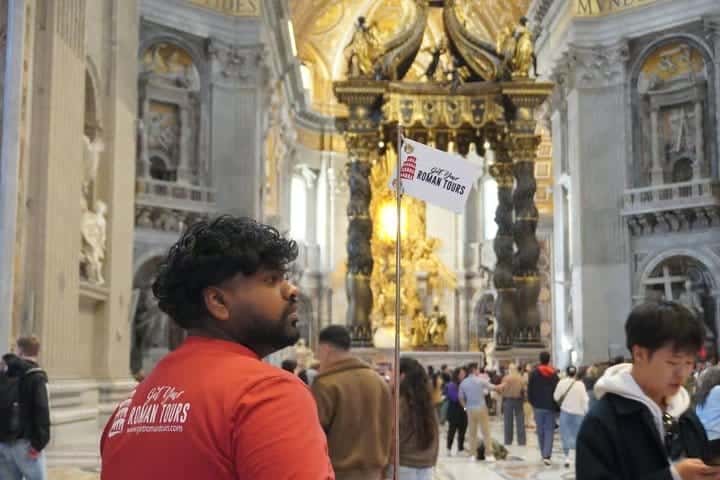
La Piazza Barberini se trouve à environ 10 minutes à pied de la fontaine de Trevi et à une distance similaire de la Place d'Espagne, en faisant un lien naturel entre les élégants quartiers centraux de Rome. Une visite guidée à pied de Rome à travers le centre historique traverse parfois cette place ou à proximité, particulièrement sur les itinéraires reliant la fontaine de Trevi à la Via Veneto et à la zone des Jardins du Borghèse.
Elle est également à une courte distance de marche de la Villa Borghèse, accessible via l'extrémité supérieure de la Via Veneto, permettant aux voyageurs d'enchaîner un arrêt fontaine du Bernin, une promenade sur un boulevard de l'ère de la Dolce Vita, et une visite d'un grand parc et d'une galerie en un seul itinéraire continu et praticable à pied à travers plusieurs époques distinctes de l'histoire romaine.
Une Petite Place qui a du Poids
La Piazza Barberini est un espace véritablement modeste selon les normes romaines, aucune grandeur ovale, aucun obélisque égyptien, aucune terrasse panoramique étendue. Ce qu'elle offre à la place est une qualité artistique concentrée : deux fontaines authentiques et bien préservées du Bernin et une proximité directe avec l'une des plus belles fresques de plafond baroques de Rome, tout cela dans un rayon de cinq minutes. Pour les voyageurs qui privilégient la qualité de l'artisanat plutôt que l'échelle et le spectacle, ce rond-point discret surpasse tranquillement plusieurs places plus célèbres et plus fréquentées ailleurs dans la ville.
Une Association Utile : Barberini et Quirinal Ensemble
Les voyageurs intéressés par le mécénat papal baroque de Rome et son histoire politique ultérieure peuvent combiner une visite de la Piazza Barberini avec une marche jusqu'à la Piazza del Quirinale, à environ 10-15 minutes, traçant un itinéraire qui passe de l'héritage artistique somptueux du XVIIe siècle d'un pape au siège de l'institution (d'abord papale, puis royale, maintenant présidentielle) qui a finalement hérité et remodelé une grande partie du pouvoir gouvernant de Rome. Les deux places, bien que rarement mentionnées ensemble, forment une courte promenade étonnamment cohérente à travers plusieurs siècles de la façon dont le pouvoir à Rome a été affiché, décoré, et finalement transmis entre des types de dirigeants très différents.

Le Quartier au-delà de la Place
La Piazza Barberini se trouve dans un quartier qui relie tranquillement plusieurs identités romaines distinctes : les élégantes rues résidentielles montant vers la Colline du Quirinal, l'agitation commerciale menant vers la fontaine de Trevi, et le glamour maintenant fané de la Via Veneto menant vers le nord. Marcher même une courte boucle autour de la place révèle un mélange d'hôtels haut de gamme, d'immeubles d'appartements romains quotidiens, et une poignée de petites trattorias familiales qui servent la même clientèle depuis des générations, largement épargnées par la scène culinaire plus agressivement orientée vers les touristes trouvée plus près de la fontaine de Trevi ou du Panthéon.
Questions fréquemment posées
La visite de la Piazza Barberini est-elle gratuite ?+
Oui, les deux fontaines et la place elle-même sont gratuites et accessibles à toute heure. Seule la galerie du Palazzo Barberini nécessite un billet.
Le Bernin a-t-il conçu tout le palais ?+
Non, le Bernin contribua à des éléments spécifiques de la conception du palais, mais Carlo Maderno servit d'architecte en chef, Francesco Borromini contribuant aussi significativement, particulièrement aux escaliers intérieurs et aux détails structurels.
Pourquoi y a-t-il un symbole d'abeille sur les fontaines ?+
L'abeille était l'emblème héraldique de la famille Barberini, qui commanda les deux fontaines durant la papauté du pape Urbain VIII dans les années 1640, et elle apparaît tout au long de leurs commandes architecturales à travers Rome comme une sorte de signature.
La Fontaine du Triton fonctionne-t-elle encore ?+
Oui, la fontaine reste fonctionnelle et est régulièrement entretenue dans le cadre du réseau de fontaines publiques historiques de Rome.
Combien de temps dure une visite ?+
Voir les deux fontaines prend 10-15 minutes. Ajoutez 1 à 1,5 heures si vous visitez aussi la galerie du Palazzo Barberini.
Y a-t-il un parking près de la place ?+
Le stationnement dans la rue dans cette zone est extrêmement limité et coûteux ; les transports publics via la station de métro Barberini sont le choix pratique pour la plupart des visiteurs.
La Connexion Plus Large avec la Via Veneto
La Piazza Barberini se trouve au pied sud de la Via Veneto, le large boulevard bordé d'arbres qui devint internationalement célèbre dans les années 1950 et 60 comme le cœur glamour de la Rome de l'ère de "La Dolce Vita", un aimant pour les stars de cinéma, les paparazzi, et la haute société durant l'âge d'or du cinéma italien. Bien que la réputation de la rue pour repérer les célébrités se soit considérablement estompée depuis, monter depuis la place offre encore un sens de ce glamour romain du milieu du siècle, avec de grands hôtels et des cafés en plein air bordant un itinéraire qui accueillait autrefois certains des visages les plus reconnaissables du cinéma européen.
Cette connexion entre une austère fontaine papale baroque et une avenue associée à la culture des célébrités des années 1960 est une juxtaposition typiquement romaine : des siècles d'histoire superposée comprimés en une seule courte promenade, où le blason familial d'un pape du XVIIe siècle se trouve à quelques centaines de mètres de l'endroit où Fellini a autrefois filmé.
Pourquoi ce Carrefour Négligé Mérite une Pause
La Piazza Barberini est traitée, par la plupart des voyageurs, comme une pure infrastructure de transit, une sortie de métro, un endroit pour prendre un taxi, un rond-point à traverser rapidement. Mais s'arrêter même cinq minutes révèle deux authentiques fontaines du Bernin, un blason familial avec une histoire étrange et légèrement sombre, et une ligne directe vers l'une des fresques de plafond les plus extravagantes de Rome à quelques pas seulement. Peu des carrefours les plus fréquentés de la ville cachent autant d'art baroque à la vue de tous.
Ce que Cette Place Enseigne sur la Rome Baroque en Général
La Piazza Barberini est, à bien des égards, une parfaite étude de cas miniature de la façon dont la Rome baroque fonctionnait réellement comme un système de mécénat artistique : une famille puissante accède à la papauté, canalise d'énormes ressources vers une poignée d'artistes favoris, et produit, dans une fenêtre remarquablement courte, un ensemble de chefs-d'œuvre interconnectés (fontaines, palais, fresques de plafond) portant tous la signature héraldique de la famille. Comprendre ce schéma ici rend beaucoup plus facile de reconnaître la même dynamique se jouant à la Piazza Navona sous Innocent X, ou sur d'innombrables façades d'église et chapelles à travers la ville financées par d'autres familles papales ambitieuses durant le même boom de construction baroque d'environ un siècle.
Un bref récapitulatif historique, si vous manquez de temps
- 1623-1644 : Maffeo Barberini règne en tant que pape Urbain VIII, lançant l'une des périodes les plus somptueuses de mécénat artistique baroque de Rome
- 1627 : la construction du Palazzo Barberini commence, employant le Bernin, Borromini, et Carlo Maderno
- Vers 1643 : le Bernin achève la Fontana del Tritone au centre de la place
- Vers 1644 : le Bernin achève la plus petite Fontana delle Api à proximité, à l'origine une fontaine à boire publique
- 1639 : Pietro da Cortona achève la fresque de plafond du Triomphe de la Divine Providence à l'intérieur du palais
- Aujourd'hui : les deux fontaines restent en usage public actif, et le palais abrite une partie de la Galerie Nationale d'Art Ancien de Rome
Cette explosion d'activité de deux décennies sous une seule famille papale produisit certaines des œuvres d'art baroques les plus durables de toute la ville, un rappel de combien les grandes réalisations artistiques de Rome étaient souvent concentrées dans la fenêtre de mécénat d'un seul pontificat ambitieux.
Quoi que ce soit d'autre qui vous amène à travers ce rond-point animé, accordez à la Fontaine du Triton au moins une minute d'attention véritable avant de continuer, il est facile de la confondre avec une décoration urbaine ordinaire, mais c'est un original du Bernin pleinement réalisé, faisant le même travail pour lequel il fut conçu il y a près de quatre siècles.
Peu de places aussi petites regorgent d'autant de véritable pedigree artistique, et presque aucune d'entre elles ne nécessite si peu d'effort pour s'intégrer dans un itinéraire romain existant, se trouvant comme elles le sont directement entre deux des monuments les plus visités de la ville.
Traitez-la comme la pause brève et gratifiante qu'elle a toujours été destinée à être, quelques minutes d'authentique art baroque compressées entre des arrêts plus fréquentés et plus bruyants d'une longue journée romaine.
Accordez aussi un vrai regard à la plus petite fontaine, car il est facile de passer devant sans la remarquer nichée au bord de la place.
Écrit par
Get Your Roman Tours Team
Nous sommes un tour-opérateur agréé basé à Rome (Get Your Roman Tours S.R.L.S.). Nos guides animent des visites dans ces lieux chaque semaine — tout ce que vous lisez ici vient du terrain, pas de recherches en ligne. À propos · Posez-nous vos questions