The Complete History of the Vatican Museums: From Ancient Sculptures to the World's Greatest Art Collection
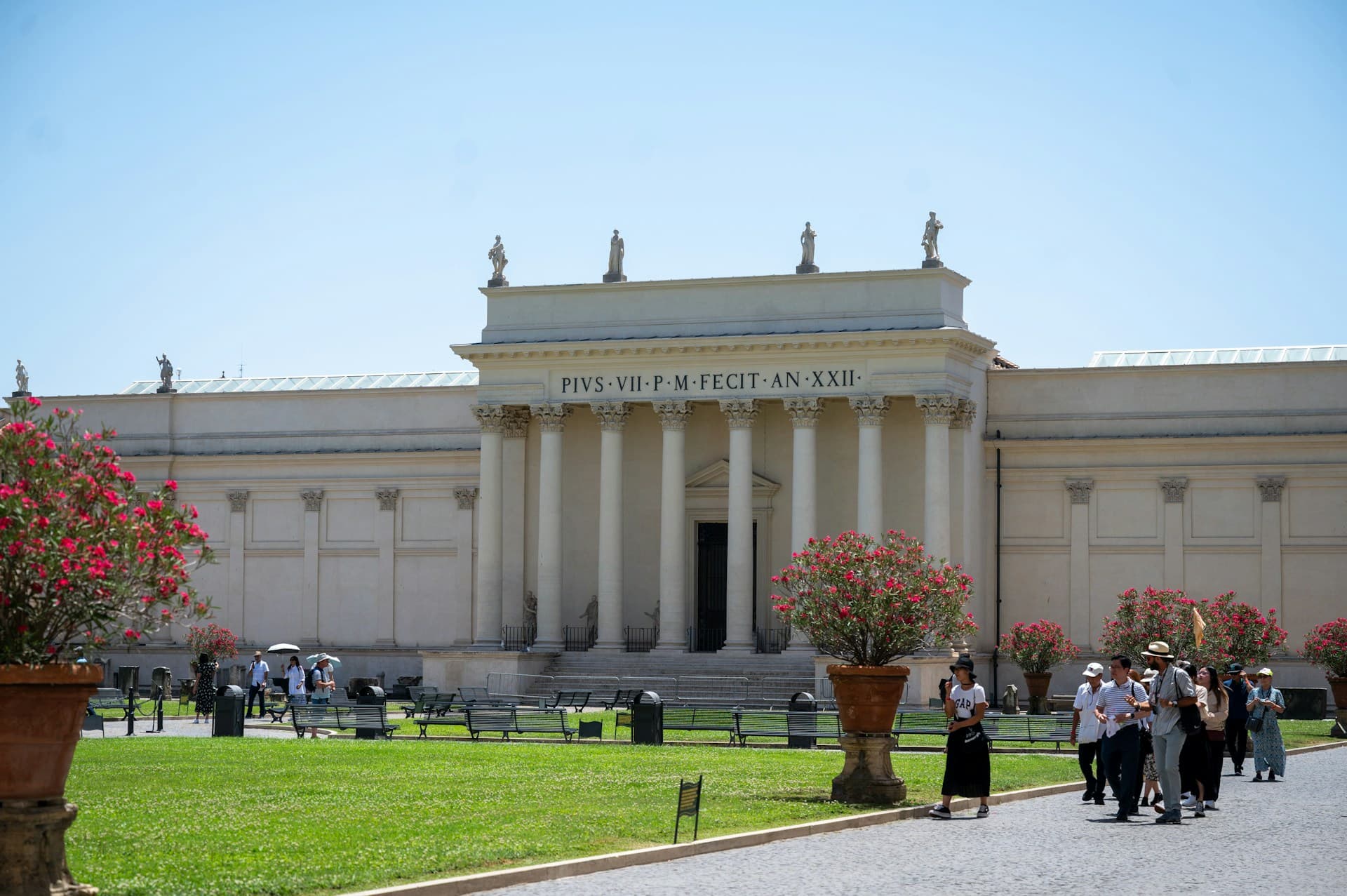
The Vatican Museums are not simply a place where art is stored and displayed. They are the living record of one of the most ambitious, complex, and sometimes turbulent collecting projects in the entire history of human civilization. To walk through their corridors is to walk through more than five centuries of papal ambition, artistic genius, conquest, diplomacy, scholarship, and faith. The story of how these museums came to exist and how they grew into what they are today is as fascinating as anything hanging on their walls.
The World Before the Vatican Museums: The Papal Collections Begin
To understand how the Vatican Museums came to be, you need to go back further than their official founding date. Long before any pope thought to open a museum to the public, the Catholic Church had been accumulating objects of extraordinary significance for over a thousand years. Early popes collected sacred relics, manuscripts, liturgical objects, and votive offerings. The Vatican treasury swelled across the medieval centuries with gifts from Christian kings, donations from the faithful, and objects seized during the Church's various military and political campaigns across Europe and the Mediterranean world.
But the collections that would eventually form the nucleus of the Vatican Museums were not primarily religious in character. They were ancient. They were pagan. And their acquisition represents one of the most remarkable intellectual transformations in European history: the moment when the Church stopped viewing the art and culture of pre-Christian antiquity as something to be feared or destroyed and started recognising it as something to be celebrated, studied, and preserved.
Pope Nicholas V and the Birth of the Vatican Library (1447–1455)
The story arguably begins in earnest with Pope Nicholas V, who reigned from 1447 to 1455. Nicholas was a humanist scholar before he was a pope, a man who had spent years in close contact with the great Florentine intellectuals of his age, and he brought that scholarly sensibility directly into the papacy. His most enduring contribution was the formal establishment of the Vatican Library the Bibliotheca Apostolica Vaticana as a public institution, gathering manuscripts from across the known world and making them available to scholars.
The Vatican Library is not the same institution as the Vatican Museums, but its founding represents the same impulse: the conviction that knowledge and culture should be gathered, organised, protected, and made accessible. Nicholas V also initiated a massive architectural transformation of Rome, commissioning new churches, rebuilding city walls, and beginning the earliest plans for what would eventually become the new St. Peter's Basilica. He understood, perhaps more clearly than any pope before him, that Rome's physical and cultural grandeur was inseparable from the authority and prestige of the Church itself.
This idea that great art and great architecture were not vanities but instruments of spiritual and institutional power would animate papal collecting for the next two centuries and beyond. Every subsequent pope who added to what eventually became the Vatican Museums was, in some sense, building on the foundation that Nicholas V had established.
Pope Sixtus IV and the Capitoline Gift (1471)
The next decisive moment came in 1471, when Pope Sixtus IV made a gesture of extraordinary cultural generosity — or, depending on how you read it, extraordinary political calculation. He donated a group of celebrated ancient bronze sculptures to the Roman people and had them placed on the Capitoline Hill. The gift included the famous bronze she-wolf (then believed to date from antiquity, though modern analysis has placed it in the medieval period), a colossal bronze head of Emperor Constantine, and several other pieces that had been held in papal collections.
This act of donation was not selfless. Sixtus IV was a shrewd and calculating pope who understood that by giving the Roman people access to ancient sculptures associated with the glory of their city, he was simultaneously cultivating popular goodwill and reinforcing his own image as a patron of learning and culture. But whatever the motivation, the consequence was real: significant ancient works of art were now on public display in Rome for the first time in centuries.
Sixtus IV is also responsible for one of the most consequential pieces of architecture in the entire Vatican complex. In 1477, he commissioned the building of a new private chapel for the papal court. That chapel was named the Cappella Sistina the Sistine Chapel after its founder. At the time it was completed, its walls were frescoed by the greatest painters of the age, including Pietro Perugino, Sandro Botticelli, Domenico Ghirlandaio, and Cosimo Rosselli. These frescoes depicted scenes from the lives of Moses and Christ and remain visible on the lower walls of the Chapel today, though they are inevitably overshadowed by what came later.
Pope Julius II and the True Founding of the Vatican Museums (1503–1513)
The man who is officially recognised as the founder of the Vatican Museums — the pope whose specific act triggered everything that followed — was Julius II, who reigned from 1503 to 1513. Julius was arguably the most culturally consequential pope in history, a ferociously energetic and ambitious man who effectively remade the visual culture of Rome and the Catholic Church during a single decade. He commissioned Michelangelo to paint the Sistine Chapel ceiling, commissioned Raphael to fresco his private apartments, commissioned Bramante to design the new St. Peter's Basilica, and set in motion artistic projects of a scale and ambition that had not been seen since the height of the Roman Empire.
But his specific founding act for the Vatican Museums came in 1506, with the discovery and acquisition of a single sculpture.
In January of that year, workers digging in a vineyard on the Esquiline Hill in Rome uncovered a remarkable piece of ancient Greek marble: a large sculptural group depicting the Trojan priest Laocoön and his two sons being strangled by sea serpents, a punishment sent by the gods to prevent Laocoön from warning the Trojans about the wooden horse. The sculpture had been described by the ancient Roman writer Pliny the Elder as the greatest work of art in existence, and its rediscovery caused an immediate sensation. Michelangelo himself rushed to see it on the day it was unearthed.
Julius II purchased the sculpture almost immediately and had it transported to the Vatican, where he placed it in the Cortile delle Statue — the Statue Courtyard — within the Belvedere Palace complex. This act of placing an ancient work of pagan art in a dedicated outdoor space specifically designed for its display and public contemplation is widely regarded as the founding moment of the Vatican Museums. It was not simply collecting. It was curation. It was the conscious creation of a context in which ancient art could be encountered, studied, and admired.
The Laocoön was soon joined by other masterpieces. The Apollo Belvedere, an ancient Roman marble copy of a lost Greek bronze depicting the god Apollo, was already in the collection and was moved to the same courtyard. The Belvedere Torso — a powerfully muscular ancient fragment that Michelangelo reportedly studied obsessively and refused to restore, declaring it perfect as it was — joined them. The Venus Felix and the Ariadne followed. Within a few years, the Cortile delle Statue had become one of the most celebrated collections of ancient sculpture in the world, drawing artists, scholars, and educated visitors from across Europe.
Julius II's decision to make this collection accessible to create a space in which people could come and look at ancient art established a principle that all subsequent additions to the Vatican collections would follow. The objects were not locked away. They were displayed. They were meant to be seen.
Michelangelo and the Sistine Chapel Ceiling (1508–1512)
No account of the Vatican's cultural history can pass over what happened inside the Sistine Chapel between 1508 and 1512 without pausing for a long time. Julius II commissioned Michelangelo, then primarily known as a sculptor, not a painter to fresco the Chapel's ceiling in 1508. Michelangelo initially resisted, arguing that he was not a painter and that the commission should go to someone else. Julius II was not a man who accepted refusals.
What followed was one of the most extraordinary feats of individual artistic creation in the entire history of human civilisation. Working largely alone, often lying on his back on scaffolding in cramped and physically punishing conditions, Michelangelo spent four years painting over 300 figures across more than 500 square metres of curved ceiling surface. The programme he developed in consultation with theologians and with Julius himself depicted nine scenes from the Book of Genesis along the central spine of the ceiling, surrounded by figures of prophets and sibyls, ignudi (nude athletic figures), and scenes from the Old Testament in the spandrels and lunettes. At the centre of the whole composition sat the most famous image in the history of art: the Creation of Adam, in which God reaches across a void to touch the outstretched finger of the newly created first man.
The theological depth, the compositional complexity, the sheer physical scale, and the towering quality of the individual figures made the Sistine Chapel ceiling immediately recognised as something unprecedented. It transformed Michelangelo's reputation. It transformed the Sistine Chapel from a significant papal ceremonial space into the single most visited and most emotionally powerful room in the world. And it made the Vatican, already an extraordinary collection of art and architecture, into something that was in a category entirely of its own.
Michelangelo would return to the Sistine Chapel more than two decades later, under the commission of Pope Paul III, to paint the altar wall with the Last Judgment. Completed in 1541, when Michelangelo was in his mid-sixties, the Last Judgment is a vast and terrifying vision of over 300 figures depicting the Second Coming of Christ, the resurrection of the dead, and the fate of human souls. It caused controversy immediately upon completion, partly for its large number of nude figures, a later pope would commission another artist to paint loincloths over many of them and partly for its emotional intensity, which many contemporaries found more disturbing than devotional. Today it is recognised as one of the greatest paintings in existence.
Raphael and the Stanze (1508–1524)
Almost exactly simultaneously with Michelangelo's work on the Sistine ceiling, Julius II commissioned another artist who was transforming the possibilities of painting in ways that seemed to contemporaries almost miraculous. Raphael of Urbino was in his mid-twenties when Julius summoned him to Rome and gave him the task of frescoing his private papal apartments, four interconnected rooms that would become known as the Stanze di Raffaello, the Raphael Rooms.
The first and most celebrated room, the Stanza della Segnatura, was completed around 1511. Its four walls were devoted to the four great branches of human knowledge: theology, philosophy, law, and the arts, and the philosophical fresco on the south wall, depicting the great thinkers of ancient Greece and Rome gathered in a vast classical hall in an act of intellectual communion, became known as the School of Athens. It is arguably the most intellectually ambitious painting of the entire Renaissance: Plato and Aristotle stand at the centre, surrounded by Socrates, Pythagoras, Heraclitus, Euclid, Diogenes, and dozens of others, each engaged in teaching, arguing, writing, or contemplating. Raphael included portraits of his contemporaries among the ancient figures: Michelangelo appears as the brooding Heraclitus, seated alone in the foreground; Leonardo da Vinci is believed to appear as Plato.
The other three rooms followed over the next decade and a half, some completed by Raphael himself and some by his workshop after his death in 1520 at the tragically young age of 37. Each room has a distinct thematic programme, and together they represent a sustained meditation on the relationship between human knowledge and divine order that is as philosophically serious as anything in the visual arts. The Stanze di Raffaello and the Sistine Chapel ceiling, created simultaneously by two of the greatest artists who ever lived, within a few hundred metres of each other, represent a moment of artistic concentration that has never been equalled in the history of the world.
The Growth of the Collections: Leo X to Paul III (1513–1549)
Julius II died in 1513 and was succeeded by Leo X, the son of Lorenzo de' Medici and a man who had grown up surrounded by the greatest art and scholarship of Renaissance Florence. Under Leo X, the Vatican continued to accumulate antiquities and contemporary art, and Rome continued its transformation into the cultural capital of the Western world. Leo was a more relaxed and pleasure-loving pope than Julius, but no less committed to the idea that the Church should express its authority and its vision through art of the highest quality.
The decades that followed Julius's death were turbulent. In 1527, a catastrophic event shook Rome to its foundations: the Sack of Rome by the troops of Holy Roman Emperor Charles V. The city was devastated, thousands were killed, and enormous quantities of art and wealth were looted or destroyed. The Vatican was directly threatened; Pope Clement VII famously fled through the secret passageway connecting the Vatican to the Castel Sant'Angelo, sheltering there while his city burned around him. The Sack of Rome interrupted the flowering of Renaissance culture in the city and left a psychological and physical wound that took generations to heal.
But the collections survived, largely intact, and the process of accumulation resumed under subsequent popes. Paul III, who reigned from 1534 to 1549, commissioned Michelangelo to paint the Last Judgment and also asked him to take charge of the architectural transformation of the Capitoline Hill and to serve as chief architect of the new St. Peter's Basilica. Paul III was also the pope who established the Council of Trent, launching the Counter-Reformation that would reshape the Catholic Church's relationship to art and culture in ways both liberating and restrictive.
The Belvedere Courtyard and the Architecture of Display
One of the most important but least celebrated contributions to the history of the Vatican Museums was architectural rather than artistic. When Julius II acquired the Laocoön in 1506 and needed somewhere to display it, he turned to his chief architect Donato Bramante to design the space. Bramante created the Cortile del Belvedere — an enormous courtyard connecting the Vatican Palace to the Belvedere Palace — as well as the smaller Cortile delle Statue (later renamed the Octagonal Courtyard) where the sculptures were actually displayed.
The design of the Cortile del Belvedere was revolutionary. It was not simply a space in which things were placed; it was a carefully composed architectural environment designed to frame, enhance, and create the experience of encountering ancient art. The arrangement of the statues within their niches, the circulation routes through the courtyard, the relationship between sculpture and architecture — all of this reflected a new and sophisticated understanding of what a display space for ancient art should be. The Belvedere Courtyard became the model for museum design that subsequent generations of architects and curators would study and emulate across Europe for centuries.
Bramante also designed what would become one of the Vatican Museums' most celebrated architectural features: the extraordinary double-helix staircase known as the Bramante Staircase, built around 1505 to connect the Vatican Palace to the Belvedere. Its spiralling ramp was designed without steps, originally to allow horses and wheeled vehicles to ascend and descend without difficulty. The staircase is considered one of the masterpieces of Renaissance architecture and remains one of the most photographed objects in the entire Vatican complex.
The Gallery of Maps and the Expansion Under Gregory XIII (1572–1585)
By the latter half of the 16th century, the Vatican's collections had grown to the point where simply displaying antiquities in the Belvedere Courtyard was no longer sufficient. New galleries were needed, and the popes of the late 16th century built them on a spectacular scale.
Pope Gregory XIII, who reigned from 1572 to 1585, is best known outside Italy for his reform of the calendar — the Gregorian calendar that most of the world uses today. But within the Vatican Museums, his most significant contribution was the commissioning of one of the greatest decorative spaces in the entire complex. In the early 1580s, Gregory asked the cartographer and Dominican friar Ignazio Danti to create a gallery that would depict the whole of Italy in painted maps. The result was the Gallery of Maps, a corridor 120 metres long and 6 metres wide running through the upper floor of the Vatican Palace, its walls covered with 40 large topographical frescoes depicting the regions of Italy, the major islands, the principal port cities, and the sieges of various Italian towns.
The maps were not merely decorative. They were expressions of geographical and political knowledge, representations of the territories under papal influence, and celebrations of the scope of the Church's reach. But they were also extraordinarily beautiful, painted by Danti and a team of assistants with a precision and richness of colour that makes the Gallery of Maps one of the most visually overwhelming spaces in the entire museums complex. The vaulted ceiling above the maps is itself a masterpiece, painted with scenes from the history of the Church in vivid blues, greens, golds, and reds.
The Gallery of Maps was completed in approximately three years, a remarkable achievement given its scale. It remains today one of the most heavily photographed spaces in the Vatican Museums, and standing at one end and looking down its full length — with the maps stretching away on either side and the painted ceiling arching overhead — is one of the genuinely awe-inspiring moments available to any visitor to Rome.
The Gallery of Tapestries and the Expansion of the Collection (16th Century)
Running parallel to the Gallery of Maps, and completed around the same period, is the Gallery of Tapestries — a 75-metre-long hall hung with a series of enormous Flemish tapestries woven in Brussels in the early 16th century. These tapestries were produced based on cartoons (preparatory designs) by the pupils of Raphael and depict scenes from the life of Jesus Christ and various events from the history of the papacy.
The tapestries represent an extraordinary feat of textile production. Each one is enormous — several metres high and of comparable width — and the level of detail woven into the fabric, including realistic representations of human faces, complex architectural backgrounds, and subtle gradations of colour that give the figures an almost three-dimensional quality, is extraordinary. Some of the individual tapestries took years to complete. Together they represent one of the finest collections of Renaissance textile art in the world.
The acquisition of the tapestry collection was part of a broader pattern of expansion across the 16th century in which the Vatican collections moved well beyond ancient sculpture to encompass painting, textiles, decorative objects, and eventually natural history specimens, ethnographic collections, and much more. Each pope of the period added something, and the cumulative effect over the course of the century was to transform the Vatican from a collection of remarkable things into something that could genuinely begin to be called a museum.
The Pio Clementino Museum: The First Formal Museum (1771–1793)
The transformation from collection to museum in the modern sense of the word — an institution with a systematic programme of acquisition, classification, display, and public access — happened gradually, but it accelerated dramatically in the 18th century under two popes whose names it bears: Clement XIV and Pius VI, who together created the Museo Pio Clementino between 1771 and 1793.
The Pio Clementino was the first part of the Vatican complex to be formally organised as a museum in the modern sense. Its design was overseen by the architects Alessandro Dori, Michelangelo Simonetti, and Pietro Camporesi, who created a series of spectacular neoclassical galleries specifically designed to display the Vatican's ancient sculptures to their maximum effect. The Round Room, with its vast domed ceiling modelled on the Pantheon and its floor of ancient Roman mosaic. The Hall of the Muses, with its ancient statues of Apollo and the Muses surrounding a famous ancient torso. The Cabinet of Masks, decorated with ancient floor mosaics depicting theatrical masks. The Gallery of Statues and the Gallery of Busts, displaying hundreds of ancient portraits and figures. And at its heart, the Octagonal Courtyard — the original Cortile delle Statue of Julius II — now reorganised and enclosed within the larger museum structure.
The creation of the Pio Clementino was not simply an act of organisation. It was a philosophical statement about the relationship between the Church and antiquity, and about the nature and purpose of a museum. The decision to display ancient pagan sculptures in purpose-built neoclassical galleries, with careful attention to lighting, circulation, and the visual relationships between objects, reflected an Enlightenment sensibility that was reshaping intellectual life across Europe. The Vatican was not merely collecting beautiful things. It was creating a public institution of learning, a place where the art and culture of the ancient world could be studied, understood, and appreciated by all.
Napoleon and the Plunder of the Vatican (1797–1815)
The history of the Vatican Museums cannot be told honestly without confronting the most painful episode in their existence: the systematic looting of the collections by Napoleon Bonaparte. In 1797, Napoleon's forces invaded Italy and imposed the Treaty of Tolentino on a weakened papacy. Under the terms of this treaty, the Vatican was forced to surrender 100 of its greatest artworks to France, including the Laocoön — the very sculpture whose acquisition had founded the museums — the Apollo Belvedere, the Belvedere Torso, and dozens of other irreplaceable masterpieces. These objects were taken to Paris, where they were displayed in the Louvre (then called the Musée Napoléon) as trophies of French conquest.
The looting was devastating. The Vatican Museums were stripped of their greatest treasures, and the blow to the cultural prestige of the papacy was severe. Pope Pius VI, the very pope who had built the Pio Clementino, was taken prisoner by the French and died in captivity in Valence in 1799, aged 81, having watched the destruction of the institution he had worked so hard to build.
When Napoleon's empire finally collapsed following his defeat at Waterloo in 1815, the question of what to do with the looted art became urgent. The diplomat and sculptor Antonio Canova, acting on behalf of the papacy, negotiated brilliantly at the Congress of Vienna and secured the return of the vast majority of the stolen works. The Laocoön came home. The Apollo Belvedere came home. The Belvedere Torso came home. It was a remarkable diplomatic achievement, and the return of these objects was celebrated in Rome with genuine public jubilation.
Not everything was returned. Some works remained in France, either because their repatriation was not completed or because specific pieces were retained through further negotiation. But the bulk of the Vatican's greatest treasures did come back, and the episode — painful as it was — paradoxically strengthened the papacy's commitment to the Museums as an institution. Having lost the collections once, the Church was more determined than ever to protect, expand, and properly organise them.
The 19th Century: New Museums, New Collections
The 19th century was a period of remarkable expansion and diversification for the Vatican Museums. The popes of this era were, in general, politically weakened — the process of Italian unification gradually stripped the papacy of its temporal power, culminating in 1870 when the Papal States were formally absorbed into the Kingdom of Italy and the pope became what he technically remains today: the ruler of Vatican City alone. But what was lost in political power was compensated for, at least in part, by cultural investment.
Pope Gregory XVI, who reigned from 1831 to 1846, was a conservative in politics but an enthusiast for archaeology and scholarship. He founded two major new museums that significantly expanded the scope of the Vatican collections. The Gregorian Egyptian Museum, opened in 1839, displayed the Vatican's growing collection of ancient Egyptian artefacts — mummies, sarcophagi, papyrus texts, statues, and ritual objects — accumulated through purchases, donations, and the spoils of various archaeological excavations. It was one of the first dedicated Egyptian museums in the world and reflected the explosion of European interest in ancient Egypt that had followed Napoleon's Egyptian campaign of 1798–1801 and the decipherment of the Rosetta Stone by Champollion in 1822.
Gregory XVI also founded the Gregorian Etruscan Museum in 1837, dedicated to the art and culture of the Etruscan civilisation that had preceded Rome in central Italy. The museum's holdings included thousands of objects excavated from Etruscan tombs — bronze vessels, painted pottery, gold jewellery, funeral urns, terracotta sculptures — and represented one of the finest collections of Etruscan material in existence.
These new museums reflected an important shift in the Vatican's collecting philosophy. Where Julius II and his immediate successors had focused almost exclusively on ancient Greek and Roman art — the classical tradition that the Renaissance had so powerfully revived — the 19th-century popes were increasingly interested in the broader picture of ancient civilisation: Egypt, Etruria, the prehistoric Mediterranean, and eventually the cultures of non-Western civilisations encountered through the Church's global missionary activities.
The Pinacoteca: Building a Collection of Paintings (1816–1932)
Although the Vatican had been accumulating paintings since the Renaissance, it was surprisingly late to create a dedicated painting gallery. A first attempt was made under Pius VII in 1816, when a collection of paintings was assembled and displayed in a series of rooms in the Vatican Palace. But it was not until 1932, under Pope Pius XI, that the current Pinacoteca — the Vatican's dedicated painting museum — was opened in a purpose-built building designed by the architect Luca Beltrami.
The Pinacoteca houses 460 paintings arranged chronologically across 18 rooms, spanning from the medieval period to the early 19th century. Its holdings represent an extraordinary cross-section of the history of Italian and European painting. The medieval rooms contain works of great historical importance, including a magnificent altarpiece by Giotto from the early 14th century. The Renaissance rooms contain masterpieces by Leonardo da Vinci (an unfinished St. Jerome in the Wilderness that is one of the most haunting and psychologically intense paintings he ever made), Raphael (including the Transfiguration, his last major work, left unfinished at his death), Caravaggio (the dramatic Entombment of Christ), Titian, and Giovanni Bellini.
The establishment of the Pinacoteca as a separate, purpose-built institution was a recognition that the Vatican's painting collection had grown to the point where it could no longer be adequately displayed within the existing structures of the museums and the papal apartments. It also reflected the broader professionalisation of the Vatican Museums as an institution — the move from a collection that had grown organically over centuries to something approaching a modern museum with curatorial standards, conservation programmes, and systematic approaches to display and access.
The Lateran Treaty and the Modern Vatican (1929)
The political settlement that definitively shaped the Vatican Museums as they exist today was the Lateran Treaty of 1929, signed between Pope Pius XI and the Italian government of Benito Mussolini. The Treaty resolved the "Roman Question" — the status of the papacy following the absorption of the Papal States into Italy in 1870 — by establishing Vatican City as an independent sovereign state. The tiny territory of 0.44 square kilometres on the west bank of the Tiber was formally recognised as the property and domain of the Holy See, with full sovereignty and the rights of an independent nation.
For the Vatican Museums, the Lateran Treaty was enormously significant. It provided a clear and stable legal framework for the institution's operation, establishing the Vatican's right to maintain, develop, and control its collections without interference from the Italian state. It also provided financial resources — Italy paid substantial compensation to the Vatican as part of the settlement — that enabled significant investment in the museums' infrastructure.
The period between the Lateran Treaty and the Second World War saw several important additions to the Vatican complex. The Pinacoteca's new building was opened in 1932. New display areas were created for the ethnological and missionary collections that had been growing throughout the 19th and early 20th centuries. And the Vatican began the slow but important process of professionalising its conservation and restoration practices, recognising that the long-term survival of the collections required something more than simply leaving them in place and hoping for the best.
The 20th Century: Modernisation, Restoration, and Opening to the World
The mid-20th century brought significant changes to how the Vatican Museums understood their purpose and their relationship to the wider world. Under Pope John XXIII and especially under the transformative papacy of Paul VI (1963–1978), the Vatican underwent the sweeping modernisation of the Second Vatican Council, which affected not only the Church's theology and liturgical practice but also its approach to culture and communication.
Paul VI made one of the most surprising and in retrospect most significant decisions in the recent history of the Vatican Museums: he opened a dedicated Collection of Modern and Contemporary Art in 1973. The collection, which he had been personally assembling for years, contained over 800 works by artists from the late 19th century to the present day — Van Gogh, Matisse, Dalí, Chagall, Rodin, Munch, Klee, Kandinsky, Giorgio de Chirico, and many others, along with a substantial collection of works by contemporary Italian artists. For many visitors, the modern art collection comes as a complete surprise — the last thing they expect to find at the end of a visit to the Sistine Chapel is a room containing a Dalí or a Van Gogh. But Paul VI's intention was serious and carefully thought through: he believed that the great art of the 20th century, however far removed in style and subject matter from the Renaissance masterpieces in the rooms above, was engaged in the same fundamental human questions about existence, meaning, beauty, and the sacred, and that it belonged in dialogue with the older collections.
The Sistine Chapel Restoration (1980–1999)
The most significant conservation project in the Vatican Museums' recent history — and arguably the most consequential conservation project of the 20th century — was the systematic restoration of the Sistine Chapel, which took place in several phases between 1980 and 1999. The project was undertaken by a team of Vatican conservators working in partnership with the Japanese television network NTV, which provided funding in exchange for exclusive broadcast rights.
The restoration was not without controversy. Over the centuries, the Sistine Chapel ceiling had accumulated layers of grime, smoke from candles and incense, old varnishes applied by well-meaning but misguided earlier restorers, and various other deposits that had dramatically darkened and obscured Michelangelo's original colours. Many art historians and artists had assumed that the dark, brooding tones they could see were intentional — that Michelangelo had deliberately painted with a sombre, shadowy palette to create the ceiling's powerful emotional effect.
The restoration revealed something completely different. Beneath the centuries of accumulated dirt and old varnish lay colours of extraordinary brightness and freshness — vivid blues and greens and yellows and pinks, figures with a clarity and luminosity that had not been visible for hundreds of years. The restored ceiling looked, to many people seeing it for the first time after the work was complete, almost impossibly bright — almost garish, some critics argued, in comparison with their expectations. The debate about whether the restorers had gone too far, inadvertently removing original glazes that Michelangelo himself had applied in the final stages of his work, continued for years.
But most scholars now accept that the restoration revealed something genuinely closer to what Michelangelo intended than what centuries of grime had allowed anyone to see. The ceiling is not a dark, brooding, Romantic evocation of divine power. It is a radiant, vividly coloured, almost explosively energetic celebration of human form and divine creativity, painted by a man who had studied the ancient sculptures of the Belvedere Courtyard since his youth and who brought the lessons of those ancient artists to bear on a Christian subject of supreme theological and emotional significance.
The Vatican Museums Today: Scale, Significance, and Challenges
The Vatican Museums today are one of the largest and most visited museum complexes in the world. They employ hundreds of staff, host more than 6 million visitors annually, maintain conservation laboratories working to preserve objects ranging from ancient papyrus fragments to Baroque oil paintings, manage a library of millions of documents and manuscripts, and oversee an institutional history stretching back more than five centuries.
The scale of what has been assembled is genuinely difficult to comprehend. The Pio Clementino Museum alone contains hundreds of ancient sculptures, including some of the most famous objects in the world. The Raphael Rooms occupy four entire apartments. The Sistine Chapel — technically a functional papal chapel that is still used for the election of new popes — receives millions of visitors each year. The Pinacoteca, the Gregorian Egyptian Museum, the Gregorian Etruscan Museum, the Museum of Christian Antiquities, the Missionary Ethnological Museum, the Carriage Pavilion, the Vatican Historical Museum, the Collection of Modern and Contemporary Art — together these institutions constitute a survey of human artistic achievement from the ancient world to the present day that is available nowhere else on Earth.
The challenges facing the Vatican Museums in the 21st century are significant. Conservation is an ongoing and enormously expensive undertaking. The sheer number of visitors — up to 30,000 per day during peak season — creates wear on floors, humidity problems in galleries, and management challenges that require constant attention. The question of how to balance access with preservation, how to allow millions of people to experience extraordinary works of art without their collective presence damaging those works, is one that museum professionals at the Vatican wrestle with every year.
There is also the question of repatriation. As with many of the world's great museums, the Vatican Museums hold objects that were acquired during historical periods when the norms governing the movement of cultural property were very different from those that prevail today. Some of these objects are the subject of ongoing diplomatic discussions with the countries or communities from which they originated.
The Election of Popes: The Sistine Chapel's Living Purpose
One dimension of the Vatican Museums' history that distinguishes them from every other museum in the world is that their most famous room is not a museum space at all. The Sistine Chapel is a functioning chapel the private chapel of the papal household and it is used for the most solemn ceremony in the life of the Catholic Church: the conclave in which a new pope is elected.
When a pope dies or resigns, the College of Cardinals gathers in Rome and enters a period of sequestered deliberation in which they vote, in secret, for a new pope. The voting takes place inside the Sistine Chapel, beneath Michelangelo's ceiling, in the sight of the Last Judgment on the altar wall. The ballots are burned after each round of voting, and the colour of the smoke rising from the Chapel's chimney, black smoke for no decision reached, white smoke for a new pope elected, signals to the crowds waiting in St. Peter's Square whether the Church has a new leader.
The fact that this ancient ceremony continues to take place in the same room where Michelangelo worked, beneath the same paintings that generations of popes and cardinals have looked up at while making the most consequential decisions in the life of their institution, is one of the most extraordinary continuities in the entire history of Western civilisation. The Sistine Chapel is simultaneously one of the world's most visited tourist attractions and one of its most sacred living spaces. This tension between the museum and the holy site, between the millions of tourists and the ancient institutional purpose of the room, is not a problem that the Vatican has solved or is likely to solve. It is simply part of what the place is.
Conclusion: A Story Still Being Written
The history of the Vatican Museums is the history of one of the most sustained and consequential acts of cultural accumulation in human history. It began with a single pope's decision to place an ancient marble sculpture in a courtyard where educated people could come and look at it. It grew through five centuries of collecting, building, commissioning, receiving, sometimes losing and recovering, always expanding. It absorbed the genius of Michelangelo and Raphael. It survived the Sack of Rome and the Napoleonic looting. It weathered the political upheavals that stripped the papacy of its temporal power. It adapted to the cultural transformations of modernity, opening its doors to Van Gogh and Dalí alongside the Laocoön and the Apollo Belvedere.
What makes the Vatican Museums unique is not simply the quality or quantity of what they contain, extraordinary as both of those are. It is the sense that the collections are not arbitrary that they reflect, however imperfectly and however much the history is complicated by politics and power, a single sustained commitment to the idea that art is one of the highest expressions of human life and that preserving and displaying the greatest art of every age is a worthy use of the resources of one of the world's oldest and most enduring institutions.
The story is still being written. Conservators are still working on the frescoes. New acquisitions are still being made. Scholars are still studying objects in the Vatican's storerooms that have never been fully catalogued. And every day, millions of people from every country on Earth walk through the same corridors where Renaissance artists once worked and popes once deliberated, and look up at the same ceiling that has been looking back at the world for more than five hundred years.
This article is approximately 5,800 words. It covers the full history of the Vatican Museums from the pre-founding papal collections of the 15th century through to the institution as it exists today, and is designed for long-form SEO ranking on search terms including: history of Vatican Museums, Vatican Museums history, who founded Vatican Museums, Vatican Museums Michelangelo history, Sistine Chapel history, Raphael Rooms history, Vatican art collection history, Gallery of Maps history, Laocoön Vatican, Bramante Staircase history, Vatican Museums Napoleon, Sistine Chapel restoration.
The maps were not merely decorative. They were expressions of geographical and political knowledge, representations of the territories under papal influence, and celebrations of the scope of the Church's reach. But they were also extraordinarily beautiful, painted by Danti and a team of assistants with a precision and richness of colour that makes the Gallery of Maps one of the most visually overwhelming spaces in the entire museums complex. The vaulted ceiling above the maps is itself a masterpiece, painted with scenes from the history of the Church in vivid blues, greens, golds, and reds.
The Gallery of Maps was completed in approximately three years, a remarkable achievement given its scale. It remains today one of the most heavily photographed spaces in the Vatican Museums, and standing at one end and looking down its full length with the maps stretching away on either side and the painted ceiling arching overhead is one of the genuinely awe-inspiring moments available to any visitor to Rome.
The Gallery of Tapestries and the Expansion of the Collection (16th Century)
Running parallel to the Gallery of Maps, and completed around the same period, is the Gallery of Tapestries a 75-metre-long hall hung with a series of enormous Flemish tapestries woven in Brussels in the early 16th century. These tapestries were produced based on cartoons (preparatory designs) by the pupils of Raphael and depict scenes from the life of Jesus Christ and various events from the history of the papacy.
The tapestries represent an extraordinary feat of textile production. Each one is enormous several metres high and of comparable width and the level of detail woven into the fabric, including realistic representations of human faces, complex architectural backgrounds, and subtle gradations of colour that give the figures an almost three-dimensional quality, is extraordinary. Some of the individual tapestries took years to complete. Together they represent one of the finest collections of Renaissance textile art in the world.
The acquisition of the tapestry collection was part of a broader pattern of expansion across the 16th century in which the Vatican collections moved well beyond ancient sculpture to encompass painting, textiles, decorative objects, and eventually natural history specimens, ethnographic collections, and much more. Each pope of the period added something, and the cumulative effect over the course of the century was to transform the Vatican from a collection of remarkable things into something that could genuinely begin to be called a museum.
The Pio Clementino Museum: The First Formal Museum (1771–1793)
The transformation from collection to museum in the modern sense of the word an institution with a systematic programme of acquisition, classification, display, and public access, happened gradually, but it accelerated dramatically in the 18th century under two popes whose names it bears: Clement XIV and Pius VI, who together created the Museo Pio Clementino between 1771 and 1793.
The Pio Clementino was the first part of the Vatican complex to be formally organised as a museum in the modern sense. Its design was overseen by the architects Alessandro Dori, Michelangelo Simonetti, and Pietro Camporesi, who created a series of spectacular neoclassical galleries specifically designed to display the Vatican's ancient sculptures to their maximum effect. The Round Room, with its vast domed ceiling modelled on the Pantheon and its floor of ancient Roman mosaic. The Hall of the Muses, with its ancient statues of Apollo and the Muses surrounding a famous ancient torso. The Cabinet of Masks, decorated with ancient floor mosaics depicting theatrical masks. The Gallery of Statues and the Gallery of Busts, displaying hundreds of ancient portraits and figures. And at its heart, the Octagonal Courtyard the original Cortile delle Statue of Julius II now reorganised and enclosed within the larger museum structure.
The creation of the Pio Clementino was not simply an act of organisation. It was a philosophical statement about the relationship between the Church and antiquity, and about the nature and purpose of a museum. The decision to display ancient pagan sculptures in purpose-built neoclassical galleries, with careful attention to lighting, circulation, and the visual relationships between objects, reflected an Enlightenment sensibility that was reshaping intellectual life across Europe. The Vatican was not merely collecting beautiful things. It was creating a public institution of learning, a place where the art and culture of the ancient world could be studied, understood, and appreciated by all.
Napoleon and the Plunder of the Vatican (1797–1815)
The history of the Vatican Museums cannot be told honestly without confronting the most painful episode in their existence: the systematic looting of the collections by Napoleon Bonaparte. In 1797, Napoleon's forces invaded Italy and imposed the Treaty of Tolentino on a weakened papacy. Under the terms of this treaty, the Vatican was forced to surrender 100 of its greatest artworks to France, including the Laocoön the very sculpture whose acquisition had founded the museums the Apollo Belvedere, the Belvedere Torso, and dozens of other irreplaceable masterpieces. These objects were taken to Paris, where they were displayed in the Louvre (then called the Musée Napoléon) as trophies of French conquest.
The looting was devastating. The Vatican Museums were stripped of their greatest treasures, and the blow to the cultural prestige of the papacy was severe. Pope Pius VI, the very pope who had built the Pio Clementino, was taken prisoner by the French and died in captivity in Valence in 1799, aged 81, having watched the destruction of the institution he had worked so hard to build.
When Napoleon's empire finally collapsed following his defeat at Waterloo in 1815, the question of what to do with the looted art became urgent. The diplomat and sculptor Antonio Canova, acting on behalf of the papacy, negotiated brilliantly at the Congress of Vienna and secured the return of the vast majority of the stolen works. The Laocoön came home. The Apollo Belvedere came home. The Belvedere Torso came home. It was a remarkable diplomatic achievement, and the return of these objects was celebrated in Rome with genuine public jubilation.
Not everything was returned. Some works remained in France, either because their repatriation was not completed or because specific pieces were retained through further negotiation. But the bulk of the Vatican's greatest treasures did come back, and the episode, painful as it was, paradoxically strengthened the papacy's commitment to the Museums as an institution. Having lost the collections once, the Church was more determined than ever to protect, expand, and properly organise them.
The 19th Century: New Museums, New Collections
The 19th century was a period of remarkable expansion and diversification for the Vatican Museums. The popes of this era were, in general, politically weakened the process of Italian unification gradually stripped the papacy of its temporal power, culminating in 1870 when the Papal States were formally absorbed into the Kingdom of Italy and the pope became what he technically remains today: the ruler of Vatican City alone. But what was lost in political power was compensated for, at least in part, by cultural investment.
Pope Gregory XVI, who reigned from 1831 to 1846, was a conservative in politics but an enthusiast for archaeology and scholarship. He founded two major new museums that significantly expanded the scope of the Vatican collections. The Gregorian Egyptian Museum, opened in 1839, displayed the Vatican's growing collection of ancient Egyptian artefacts, mummies, sarcophagi, papyrus texts, statues, and ritual objects accumulated through purchases, donations, and the spoils of various archaeological excavations. It was one of the first dedicated Egyptian museums in the world and reflected the explosion of European interest in ancient Egypt that had followed Napoleon's Egyptian campaign of 1798–1801 and the decipherment of the Rosetta Stone by Champollion in 1822.
Gregory XVI also founded the Gregorian Etruscan Museum in 1837, dedicated to the art and culture of the Etruscan civilisation that had preceded Rome in central Italy. The museum's holdings included thousands of objects excavated from Etruscan tombs bronze vessels, painted pottery, gold jewellery, funeral urns, terracotta sculptures and represented one of the finest collections of Etruscan material in existence.
These new museums reflected an important shift in the Vatican's collecting philosophy. Where Julius II and his immediate successors had focused almost exclusively on ancient Greek and Roman art the classical tradition that the Renaissance had so powerfully revived the 19th-century popes were increasingly interested in the broader picture of ancient civilisation: Egypt, Etruria, the prehistoric Mediterranean, and eventually the cultures of non-Western civilisations encountered through the Church's global missionary activities.
The Pinacoteca: Building a Collection of Paintings (1816–1932)
Although the Vatican had been accumulating paintings since the Renaissance, it was surprisingly late to create a dedicated painting gallery. A first attempt was made under Pius VII in 1816, when a collection of paintings was assembled and displayed in a series of rooms in the Vatican Palace. But it was not until 1932, under Pope Pius XI, that the current Pinacoteca the Vatican's dedicated painting museum was opened in a purpose-built building designed by the architect Luca Beltrami.
The Pinacoteca houses 460 paintings arranged chronologically across 18 rooms, spanning from the medieval period to the early 19th century. Its holdings represent an extraordinary cross-section of the history of Italian and European painting. The medieval rooms contain works of great historical importance, including a magnificent altarpiece by Giotto from the early 14th century. The Renaissance rooms contain masterpieces by Leonardo da Vinci (an unfinished St. Jerome in the Wilderness that is one of the most haunting and psychologically intense paintings he ever made), Raphael (including the Transfiguration, his last major work, left unfinished at his death), Caravaggio (the dramatic Entombment of Christ), Titian, and Giovanni Bellini.
The establishment of the Pinacoteca as a separate, purpose-built institution was a recognition that the Vatican's painting collection had grown to the point where it could no longer be adequately displayed within the existing structures of the museums and the papal apartments. It also reflected the broader professionalisation of the Vatican Museums as an institution the move from a collection that had grown organically over centuries to something approaching a modern museum with curatorial standards, conservation programmes, and systematic approaches to display and access.
The Lateran Treaty and the Modern Vatican (1929)
The political settlement that definitively shaped the Vatican Museums as they exist today was the Lateran Treaty of 1929, signed between Pope Pius XI and the Italian government of Benito Mussolini. The Treaty resolved the "Roman Question" the status of the papacy following the absorption of the Papal States into Italy in 1870 by establishing Vatican City as an independent sovereign state. The tiny territory of 0.44 square kilometres on the west bank of the Tiber was formally recognised as the property and domain of the Holy See, with full sovereignty and the rights of an independent nation.
For the Vatican Museums, the Lateran Treaty was enormously significant. It provided a clear and stable legal framework for the institution's operation, establishing the Vatican's right to maintain, develop, and control its collections without interference from the Italian state. It also provided financial resources Italy paid substantial compensation to the Vatican as part of the settlement that enabled significant investment in the museums' infrastructure.
The period between the Lateran Treaty and the Second World War saw several important additions to the Vatican complex. The Pinacoteca's new building was opened in 1932. New display areas were created for the ethnological and missionary collections that had been growing throughout the 19th and early 20th centuries. And the Vatican began the slow but important process of professionalising its conservation and restoration practices, recognising that the long-term survival of the collections required something more than simply leaving them in place and hoping for the best.
The 20th Century: Modernisation, Restoration, and Opening to the World
The mid-20th century brought significant changes to how the Vatican Museums understood their purpose and their relationship to the wider world. Under Pope John XXIII and especially under the transformative papacy of Paul VI (1963–1978), the Vatican underwent the sweeping modernisation of the Second Vatican Council, which affected not only the Church's theology and liturgical practice but also its approach to culture and communication.
Paul VI made one of the most surprising and in retrospect most significant decisions in the recent history of the Vatican Museums: he opened a dedicated Collection of Modern and Contemporary Art in 1973. The collection, which he had been personally assembling for years, contained over 800 works by artists from the late 19th century to the present day Van Gogh, Matisse, Dalí, Chagall, Rodin, Munch, Klee, Kandinsky, Giorgio de Chirico, and many others, along with a substantial collection of works by contemporary Italian artists. For many visitors, the modern art collection comes as a complete surprise the last thing they expect to find at the end of a visit to the Sistine Chapel is a room containing a Dalí or a Van Gogh. But Paul VI's intention was serious and carefully thought through: he believed that the great art of the 20th century, however far removed in style and subject matter from the Renaissance masterpieces in the rooms above, was engaged in the same fundamental human questions about existence, meaning, beauty, and the sacred, and that it belonged in dialogue with the older collections.
The Sistine Chapel Restoration (1980–1999)
The most significant conservation project in the Vatican Museums' recent history and arguably the most consequential conservation project of the 20th century was the systematic restoration of the Sistine Chapel, which took place in several phases between 1980 and 1999. The project was undertaken by a team of Vatican conservators working in partnership with the Japanese television network NTV, which provided funding in exchange for exclusive broadcast rights.
The restoration was not without controversy. Over the centuries, the Sistine Chapel ceiling had accumulated layers of grime, smoke from candles and incense, old varnishes applied by well-meaning but misguided earlier restorers, and various other deposits that had dramatically darkened and obscured Michelangelo's original colours. Many art historians and artists had assumed that the dark, brooding tones they could see were intentional that Michelangelo had deliberately painted with a sombre, shadowy palette to create the ceiling's powerful emotional effect.
The restoration revealed something completely different. Beneath the centuries of accumulated dirt and old varnish lay colours of extraordinary brightness and freshness vivid blues and greens and yellows and pinks, figures with a clarity and luminosity that had not been visible for hundreds of years. The restored ceiling looked, to many people seeing it for the first time after the work was complete, almost impossibly bright almost garish, some critics argued, in comparison with their expectations. The debate about whether the restorers had gone too far, inadvertently removing original glazes that Michelangelo himself had applied in the final stages of his work, continued for years.
But most scholars now accept that the restoration revealed something genuinely closer to what Michelangelo intended than what centuries of grime had allowed anyone to see. The ceiling is not a dark, brooding, Romantic evocation of divine power. It is a radiant, vividly coloured, almost explosively energetic celebration of human form and divine creativity, painted by a man who had studied the ancient sculptures of the Belvedere Courtyard since his youth and who brought the lessons of those ancient artists to bear on a Christian subject of supreme theological and emotional significance.
The Vatican Museums Today: Scale, Significance, and Challenges
The Vatican Museums today are one of the largest and most visited museum complexes in the world. They employ hundreds of staff, host more than 6 million visitors annually, maintain conservation laboratories working to preserve objects ranging from ancient papyrus fragments to Baroque oil paintings, manage a library of millions of documents and manuscripts, and oversee an institutional history stretching back more than five centuries.
The scale of what has been assembled is genuinely difficult to comprehend. The Pio Clementino Museum alone contains hundreds of ancient sculptures, including some of the most famous objects in the world. The Raphael Rooms occupy four entire apartments. The Sistine Chapel technically a functional papal chapel that is still used for the election of new popes receives millions of visitors each year. The Pinacoteca, the Gregorian Egyptian Museum, the Gregorian Etruscan Museum, the Museum of Christian Antiquities, the Missionary Ethnological Museum, the Carriage Pavilion, the Vatican Historical Museum, the Collection of Modern and Contemporary Art together these institutions constitute a survey of human artistic achievement from the ancient world to the present day that is available nowhere else on Earth.
The challenges facing the Vatican Museums in the 21st century are significant. Conservation is an ongoing and enormously expensive undertaking. The sheer number of visitors up to 30,000 per day during peak season creates wear on floors, humidity problems in galleries, and management challenges that require constant attention. The question of how to balance access with preservation, how to allow millions of people to experience extraordinary works of art without their collective presence damaging those works, is one that museum professionals at the Vatican wrestle with every year.
There is also the question of repatriation. As with many of the world's great museums, the Vatican Museums hold objects that were acquired during historical periods when the norms governing the movement of cultural property were very different from those that prevail today. Some of these objects are the subject of ongoing diplomatic discussions with the countries or communities from which they originated.
The Election of Popes: The Sistine Chapel's Living Purpose
One dimension of the Vatican Museums' history that distinguishes them from every other museum in the world is that their most famous room is not a museum space at all. The Sistine Chapel is a functioning chapel the private chapel of the papal household and it is used for the most solemn ceremony in the life of the Catholic Church: the conclave in which a new pope is elected.
When a pope dies or resigns, the College of Cardinals gathers in Rome and enters a period of sequestered deliberation in which they vote, in secret, for a new pope. The voting takes place inside the Sistine Chapel, beneath Michelangelo's ceiling, in the sight of the Last Judgment on the altar wall. The ballots are burned after each round of voting, and the colour of the smoke rising from the Chapel's chimney black smoke for no decision reached, white smoke for a new pope elected signals to the crowds waiting in St. Peter's Square whether the Church has a new leader.
The fact that this ancient ceremony continues to take place in the same room where Michelangelo worked, beneath the same paintings that generations of popes and cardinals have looked up at while making the most consequential decisions in the life of their institution, is one of the most extraordinary continuities in the entire history of Western civilisation. The Sistine Chapel is simultaneously one of the world's most visited tourist attractions and one of its most sacred living spaces. This tension between the museum and the holy site, between the millions of tourists and the ancient institutional purpose of the room, is not a problem that the Vatican has solved or is likely to solve. It is simply part of what the place is.
Conclusion: A Story Still Being Written
The history of the Vatican Museums is the history of one of the most sustained and consequential acts of cultural accumulation in human history. It began with a single pope's decision to place an ancient marble sculpture in a courtyard where educated people could come and look at it. It grew through five centuries of collecting, building, commissioning, receiving, sometimes losing and recovering, always expanding. It absorbed the genius of Michelangelo and Raphael. It survived the Sack of Rome and the Napoleonic looting. It weathered the political upheavals that stripped the papacy of its temporal power. It adapted to the cultural transformations of modernity, opening its doors to Van Gogh and Dalí alongside the Laocoön and the Apollo Belvedere.
What makes the Vatican Museums unique is not simply the quality or quantity of what they contain, extraordinary as both of those are. It is the sense that the collections are not arbitrary that they reflect, however imperfectly and however much the history is complicated by politics and power, a single sustained commitment to the idea that art is one of the highest expressions of human life and that preserving and displaying the greatest art of every age is a worthy use of the resources of one of the world's oldest and most enduring institutions.
The story is still being written. Conservators are still working on the frescoes. New acquisitions are still being made. Scholars are still studying objects in the Vatican's storerooms that have never been fully catalogued. And every day, millions of people from every country on Earth walk through the same corridors where Renaissance artists once worked and popes once deliberated, and look up at the same ceiling that has been looking back at the world for more than five hundred years.